
Backlink Examples Worth Stealing: Real Links, Real Strategies
Most backlinks aren’t worth chasing. The type matters more than the count, and most guides get this backwards.
94% of blog posts in a 2019 study received zero external links. 96.55% of pages in Ahrefs’ 2023 study received no organic search traffic from Google. These two stats aren’t a coincidence. The average top-10 result has backlinks from 112 referring domains, and pages in the top 10 have 3.8x more backlinks than those ranking below them.
Some strategies delivered measurable ranking jumps within weeks. Others wasted months of outreach for links that moved nothing. The difference wasn’t effort, it was targeting the right type of backlink for the right situation.
You already know what backlinks are. Here’s a breakdown of real backlink examples by type, with the strategy behind each one, so you can reverse-engineer what works.
What Makes a Backlink Worth Having
A backlink is worth pursuing when it scores well on five criteria. Skip this filter and you’ll waste time chasing links that move nothing.
Topical relevance. A link from a WordPress blog to your WordPress tutorial is worth more than a link from a cooking site with twice the authority. 67% of SEO professionals cite low topical relevance as a red flag. Google’s algorithm weights contextual fit heavily.
Domain authority. Ahrefs measures this as Domain Rating (DR), Moz uses Domain Authority (DA). DR 40+ is a solid baseline. DR 70+ delivers maximum impact. But a DR 25 niche site that’s genuinely relevant will outperform a DR 80 generic site every time.
Real traffic. If a site has high DR but zero organic traffic, it’s likely a Private Blog Network (PBN) or a dead site coasting on old authority. 64% of SEO professionals avoid sites with declining traffic. Check the linking site’s traffic in Semrush or Ahrefs before pursuing a link.
Link placement. A contextual link within the body content of an article passes more value than a link in the footer, sidebar, or author bio. In-content, surrounded by relevant text, on a page that itself has inbound links. That’s the ideal placement.
Dofollow status. Dofollow links pass link equity directly. Nofollow links are “hints” to Google since 2019, and 79% of SEO experts believe nofollow links still impact rankings to some degree. Don’t ignore nofollow links from high-authority sites, but prioritize dofollow.
Editorial Backlink Examples (The Gold Standard)
Editorial backlinks are the highest-value links you can earn. Other sites link to you freely because your content is genuinely useful, original, or reference-worthy. You didn’t ask for them. You earned them by creating something worth linking to.
Orbit Media’s Annual Blogging Survey. Andy Crestodina surveys 1,000+ bloggers every year and publishes the results. This single piece of original research has attracted 7,100+ backlinks. Why? Because every content marketer writing about blogging trends needs data, and Orbit Media provides it. Original research is the most reliable editorial link magnet.
Brian Dean’s Google 200 Ranking Factors. Backlinko compiled every known Google ranking signal into one list. Result: 17,600+ backlinks, 8,000+ monthly organic visits, and it still ranks #1 for its target keyword years later. The strategy: be the definitive reference for a topic that people constantly need to cite.
Asana’s State of Work Innovation Survey. Asana surveyed 13,000+ workers across 6 countries and published the findings. VentureBeat, Forbes, and dozens of industry sites linked to the data. Your original research doesn’t need to be this large. Even a 200-person survey in a specific niche generates linkable data nobody else has.
The pattern across all editorial backlinks: information gain. You created something that didn’t exist before. Data, research, frameworks, or definitive reference content. If a journalist or blogger can get the same information from 10 other sources, why would they link to yours?
Guest Post Backlink Examples
Guest posting is the most scalable white-hat link building strategy when done right. You write content for another site, they give you a link back. Simple in theory, easy to mess up in practice.
Hunter.io’s Guest Post Campaign. Hunter published 68 guest posts in 2022, resulting in 174 backlinks from DR 70+ domains. Not 68 low-quality directory posts. 68 substantial articles on relevant, authoritative marketing and SaaS blogs. The key: they targeted sites in their niche with real audiences, not “write for us” link farms.
Noah Kagan on Tim Ferriss’s Blog. Early in AppSumo‘s life, Noah Kagan wrote a detailed guest post for Tim Ferriss’s audience. One post. But the audience fit was perfect, the content delivered genuine value, and the backlink from a DR 80+ domain with massive traffic delivered compound returns.
What separates good guest posting from bad:
- Good: Writing for sites in your niche that have real audiences. The content is genuinely useful to their readers. Your link is contextual within the article, not just in the bio.
- Bad: Mass-submitting to “write for us” pages on random sites. Thin 500-word articles with keyword-stuffed anchor text. Sites that publish 20 guest posts per day. Google’s SpamBrain recognizes these patterns.
When I evaluate guest post opportunities for clients, I check three things: does the site rank for relevant keywords (meaning Google trusts it for this topic), does it get real traffic (not just high DA), and does it publish content I’d actually read? If any answer is no, I pass.
Resource Page Backlink Examples
Resource page links have the highest conversion rate of any outreach strategy. These pages are curated lists of useful links on a specific topic. They exist to link out, so asking for inclusion aligns with the page’s purpose.
MIT Resource Pages. MIT (DA 93) maintains resource pages across dozens of academic topics with dofollow links to external resources. Getting on an MIT resource page is difficult but delivers one of the highest-value backlinks possible. The approach: create genuinely academic-quality content in your field and reach out to the department that maintains the relevant resource page.
Industry Association Resource Pages. Trade associations, professional organizations, and non-profits maintain resource directories for their members. If you’re in fintech, the FinTech Association resource page. If you’re in healthcare, the American Hospital Association resource list. These are niche-relevant, high-authority, and actively maintained. Most competitors don’t target them because the outreach requires credibility.
How to find resource pages: Search Google for "useful resources" + your topic, "helpful links" + your niche, or inurl:resources + your keyword. Then evaluate each page’s authority and relevance before outreaching.
Digital PR Backlink Examples
Digital PR is the most effective link building tactic in 2026. 49% of SEO experts rank it #1. The idea: create newsworthy campaigns that journalists want to cover, and the backlinks follow.
Auto Trader’s New Car Scent Campaign. Auto Trader created a fragrance that smells like a new car. Absurd? Yes. Effective? 394 backlinks from 169 domains in 8 days. BuzzFeed, Daily Mail, automotive sites, lifestyle sites. The campaign cost less than buying 10 high-quality backlinks individually.
OnlineCasinos.ca Gamers Health Campaign. They researched the physical health effects of extended gaming sessions and published the data. 200+ backlinks from BuzzFeed, Daily Mail, and gaming publications. The content was genuinely interesting to journalists covering health and gaming beats.
TechCrunch Coverage Cascade. When Userpilot raised $4.6M in seed funding, TechCrunch covered it. That single placement triggered a cascade: other tech blogs, VC sites, and industry publications all linked either to TechCrunch or directly to Userpilot. One newsworthy moment. Dozens of backlinks.
Digital PR works because journalists need stories. If you provide a genuinely interesting angle with data or a creative hook, you’re solving their problem. The backlinks are a byproduct of actual news coverage, which is why Google values them so highly.
HARO and Journalist Request Backlinks
HARO (Help a Reporter Out), now rebranded as Connectively, is the cheapest way to earn DR 80+ backlinks. You respond to journalist queries, get quoted, and earn a backlink. Placements in Forbes, Business Insider, Wired, and Mashable are achievable.
Engine Scout Built 33 Links in 6 Hours. They had a team member dedicated to responding to HARO queries rapidly. Speed matters. Journalists on HARO receive dozens of responses. The ones who respond within the first hour, with a concise expert quote and credentials, get chosen.
My experience with HARO: expect a 5-10% success rate. For every 20 pitches, 1-2 will result in a published backlink. That sounds low, but each link can be from a DR 80+ publication. Send 5 pitches per day, 25 per week, and you’ll average 3-5 high-authority backlinks per month. That’s a better ROI than almost any other strategy at zero monetary cost.
Tips that increase your success rate:
- Respond within 60 minutes of the query posting
- Lead with your credentials (why should they quote you?)
- Give a concise, quotable answer (2-3 sentences, not a 500-word essay)
- Include a specific data point or contrarian take (journalists want interesting, not generic)
- Follow up once. Not twice.
Niche Edit and Contextual Link Examples
Niche edits (also called link insertions) pass value faster than guest posts because the page is already indexed. You find a relevant article on another site, contact the publisher, and suggest adding your resource as a contextual link. No new article needed.
The link starts passing value immediately instead of waiting for a new page to build authority. That’s why many SEOs prefer this approach when they can find legitimate opportunities.
The distinction between legitimate niche edits and spam: legitimate niche edits add genuinely useful context to existing content. The site owner agrees because your resource makes their article more helpful. Spammy niche edits involve paying someone to secretly add links to articles they don’t own, or using hacked sites. The first is white hat. The second gets you penalized.
Broken Link Building Examples
Broken link building has the best pitch angle of any outreach strategy: you’re helping someone fix a problem on their site. Find dead links (404 errors) on other sites, then offer your content as a replacement.
Content Marketing Institute’s Dead Links. CMI had 134 dead pages at one point, some with 50+ referring domains each. Every dead link on a high-authority site is an opportunity for someone who has relevant replacement content. When a major resource goes offline, the sites that linked to it now have broken links they’d rather fix.
Wikipedia Dead Link Strategy. Wikipedia flags dead links with “[dead link]” tags. Search site:wikipedia.org "dead link" + your topic. If you have content that could replace the dead resource, propose the edit through Wikipedia’s editing process. These are nofollow links, but Wikipedia links drive real referral traffic and signal topical authority.
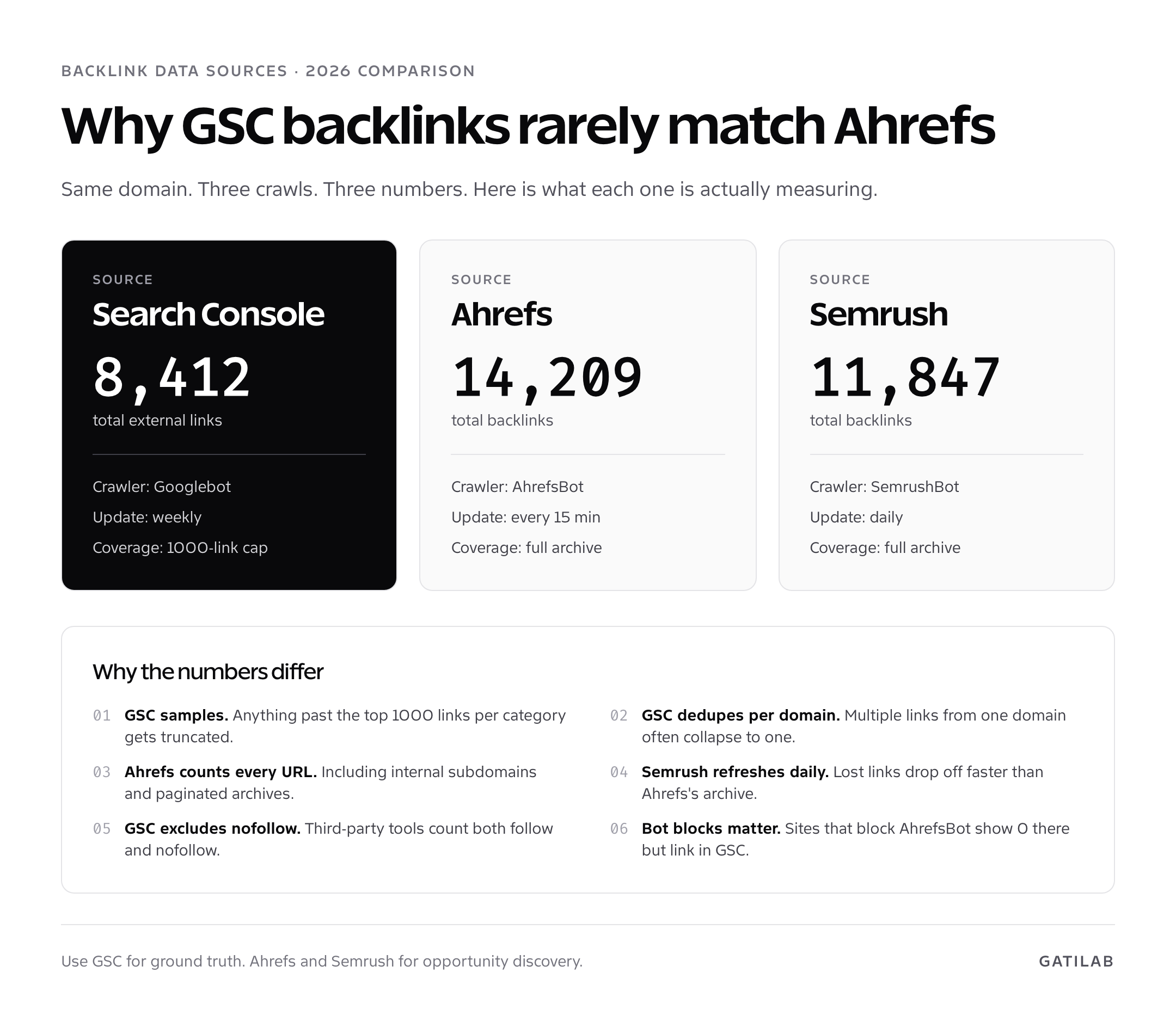
Tools for finding broken links: Screaming Frog crawls any site and identifies broken outbound links. The Check My Links Chrome extension does the same on individual pages. Ahrefs’ Broken Backlinks report shows broken inbound links to any domain. Google Search Console can also surface your own broken inbound links under the Links report.
Bad Backlink Examples (What to Avoid)
Some backlinks actively hurt your rankings. Google Penguin made that clear, and manual penalties are still issued for manipulative link patterns. Here are the ones to avoid.
PBN (Private Blog Network) Links. Networks of expired domains rebuilt specifically to link to a target site. They often have DR 30-50, zero real traffic, and link out to dozens of unrelated sites. Google’s spam team identifies PBNs by pattern: same hosting, similar templates, thin content, unnatural interlinking. I’ve had three clients come to me after PBN penalties wiped their rankings. Recovering took 6-12 months.
Comment Spam Links. Automated comments on blogs with links to your site. All nofollow, zero SEO value, and they make you look unprofessional. If your “link building agency” reports comment links as deliverables, fire them.
Link Exchange Networks. “I’ll link to you if you link to me” at scale. Google’s guidelines explicitly call this out. Natural reciprocal links between genuinely related sites are fine (two local businesses linking to each other, for instance). But organized networks where 50 sites all cross-link are flagged.
Paid Links Without Disclosure. 74% of link builders pay for links at an average of $83/link. The industry average for a “high-quality” paid backlink is about $509 in one agency survey, not a market average. But Google’s guidelines prohibit paid links that pass PageRank unless they use the rel="sponsored" attribute. If you buy links, you’re gambling that Google won’t detect them. 56% of SEO experts doubt Google can identify paid links effectively. But the 44% who got caught aren’t writing blog posts about how great it turned out.
How to Assess Any Backlink Opportunity
Use this scorecard before pursuing any link. It takes 2 minutes and saves you from wasting outreach on dead-end opportunities.
Factor What to Check Red Flag Green Flag Domain Rating Ahrefs DR DR below 20 DR 40+ with real traffic Topical Relevance Is the site in your niche? Completely unrelated topic Same industry or adjacent Organic Traffic Ahrefs/Semrush traffic estimate Zero or declining traffic Stable or growing traffic Link Placement Where will your link appear? Footer, sidebar, or author bio In-content, contextual Outbound Link Ratio How many links does the page have? 50+ outbound links (link farm) Reasonable number (5-15) Content Quality Read the page Thin, AI-generated, or spun content Well-written, useful content Spam Score Moz spam score Above 30% Below 10% Indexation Is the page indexed in Google? Not indexed (deindexed site) Indexed with cached version
If a backlink opportunity fails on topical relevance or shows signs of being a link farm, pass regardless of how high the DR is. A DR 80 link from a completely irrelevant site with 200 outbound links per page is worth less than a DR 30 link from a niche-relevant blog with 5 outbound links.
What I’d Do With Different Budgets
Link building is expensive if you do it wrong, and 75% of SEOs cite high costs as the biggest barrier. Here’s how to approach it at every budget level.
$0/month (bootstrap mode). Focus on three strategies: HARO responses (5 pitches daily, expect 3-5 links/month), unlinked brand mention conversion (use Google Alerts to find mentions, then ask for the link), and broken link building (find dead links on competitor-linking sites). These cost nothing but your time.
$500-$2,000/month. Add guest posting. Hire a researcher to find prospects and a writer to create the posts. Target 4-8 guest posts per month on DR 40+ sites. Use BuzzStream or Hunter.io for outreach management. At the same time, invest in creating one piece of original research or data-driven content quarterly. That’s your editorial link magnet.
$2,000-$5,000/month. Add digital PR. Either hire a digital PR specialist or work with an agency. Create one newsworthy campaign per month. Budget for professional data collection or creative asset production. Combined with ongoing HARO and guest posting, you should be earning 15-30 quality backlinks monthly.
$5,000+/month. Full-spectrum approach. Digital PR campaigns, ongoing guest posting, original research content, niche edit outreach, competitor backlink reverse engineering (see what links your competitors have and pursue the same sources), and podcast guesting. At this level, you can also create visual assets (infographics, data visualizations) that earn image backlinks passively. Pages using images earn 555% more quality backlinks according to Semrush data.
Backlinks and AI Search
Backlinks now affect more than just Google rankings. 73% of SEO experts believe they influence AI search result appearance, and 1 in 3 Americans now uses ChatGPT for search queries.
AI models like ChatGPT, Perplexity, and Google’s AI Overviews prioritize citing authoritative sources. Authority is partly determined by backlink signals. A page with 50 high-quality backlinks from relevant domains is more likely to be cited by AI than a page with identical content but zero backlinks.
The practical implication: link building isn’t just about Google rankings anymore. It’s about building the authority signals that make AI systems trust and cite your content. The same strategies that earn editorial backlinks (original research, definitive reference content, expert positioning) are exactly what makes content AI-citable.
This is a shift. In traditional SEO, you could sometimes rank without many backlinks by nailing on-page optimization. In AI search, the citation decision relies more heavily on perceived authority, and authority is still largely signaled by who links to you.
The recommendations here come from real-world use, not spec sheets.

Link building isn’t going away, not with Google, not with AI search. But the strategies that work have shifted. Mass outreach to link farms and directory submissions are dead. Original research, digital PR, expert positioning, and genuine relationship building are what earn backlinks that move rankings in 2026. Create content worth linking to, then make sure the right people know it exists. Start with the $0 strategies (HARO, broken link building, unlinked mentions) and scale up from there.
Frequently Asked Questions
What is an example of a high-quality backlink?
A high-quality backlink is a contextual, dofollow link from a topically relevant site with real organic traffic. For example, when Forbes links to Asana within an article about productivity tools, Asana receives an editorial backlink from a DR 93 domain. Orbit Media’s annual blogging survey earned 7,100+ backlinks by providing original research data that content marketers cite.
What are the different types of backlinks?
Major types include editorial backlinks earned naturally through quality content, guest post backlinks written for other sites, HARO journalist request backlinks from media outlets like Forbes or Business Insider, digital PR backlinks from newsworthy campaigns, resource page backlinks from curated lists at sites like MIT, niche edit contextual insertions, and broken link replacement backlinks.
What makes a backlink good or bad?
A good backlink comes from a topically relevant site with real organic traffic, DR 40+ in Ahrefs, contextual in-content placement, and natural anchor text. A bad backlink comes from PBN networks, link farms with 50+ outbound links, irrelevant sites, or pages with spun AI-generated content. Google Penguin penalties still target manipulative link patterns.
How many backlinks do I need to rank on Google?
It depends on keyword competition. Top-10 Google results average backlinks from 112 referring domains according to Backlinko research. Low-competition keywords may need 5-15 quality backlinks, while high-competition terms may need 100+. Quality matters more than quantity: ten contextual links from DR 60+ relevant sites outperform 1,000 directory links.
Are nofollow backlinks worth pursuing?
Yes. Since 2019, Google treats nofollow as a hint rather than an absolute directive. 78.8% of SEO experts surveyed believe nofollow links still impact rankings. Nofollow links from high-authority sites like Wikipedia, Forbes, and major newspapers also drive referral traffic and build brand recognition independently of their direct SEO value.
How do HARO backlinks work?
HARO, now rebranded as Connectively, connects journalists with expert sources. You sign up, browse journalist queries matching your expertise, and respond with a concise expert quote and credentials. If selected, the journalist publishes your quote with a backlink. Engine Scout built 33 HARO links in 6 hours. Expect a 5-10% success rate per pitch.
How much does link building cost?
The industry average for a single quality backlink is about $509 in one agency survey, not a market average according to Ahrefs data. Monthly link building budgets range from $0 using HARO and broken link building to $10,000+ for competitive niches with digital PR campaigns. 46% of SEO professionals spend $5,000-$10,000 monthly. About 80.9% of experts expect link building costs to rise further.
Do backlinks still matter for AI search in 2026?
Yes. 73% of SEO experts believe backlinks influence AI search result appearance. AI models like ChatGPT, Perplexity, and Google AI Overviews prioritize citing authoritative sources, and authority is partly determined by backlink signals. Pages with high-quality backlinks from relevant domains are more likely to be cited in AI-generated search responses.
Continue reading: SEO vs Paid Ads · How to Name Images for SEO · Content Repurposing
Tell Google you want more of this.
Add Gatilab as a preferred sourceOne tap, and this site shows up more often in your own Top Stories, AI Overviews and AI Mode. Remove it any time.