
Raising Your Rates: When to Increase Prices and How to Communicate It
Raising your rates is the pay increase most freelancers and agency owners keep postponing. Say you charged $75/hour for WordPress development for three years straight. In that time you shipped more client sites, learned performance optimization, built custom plugins and started managing client ad budgets. Your skills doubled. Your rate didn’t move a dollar.
Now run the numbers. If the market rate for that work was closer to $91/hour, a $16/hour gap across 1,000 billable hours a year adds up to $48,000 over those three years, roughly the price of a new car. That money went to clients who would have happily paid more. Nobody asked for a discount. You just… gave them one.
Look, if you’re reading this, you already know your rates are too low. The question isn’t whether to raise them. It’s how to do it without torching your client relationships or your confidence. The answer is a repeatable system: small yearly increases, a clear script for existing clients and a plan for the few who leave. Here’s every detail of how that works.
The Real Cost of Frozen Rates
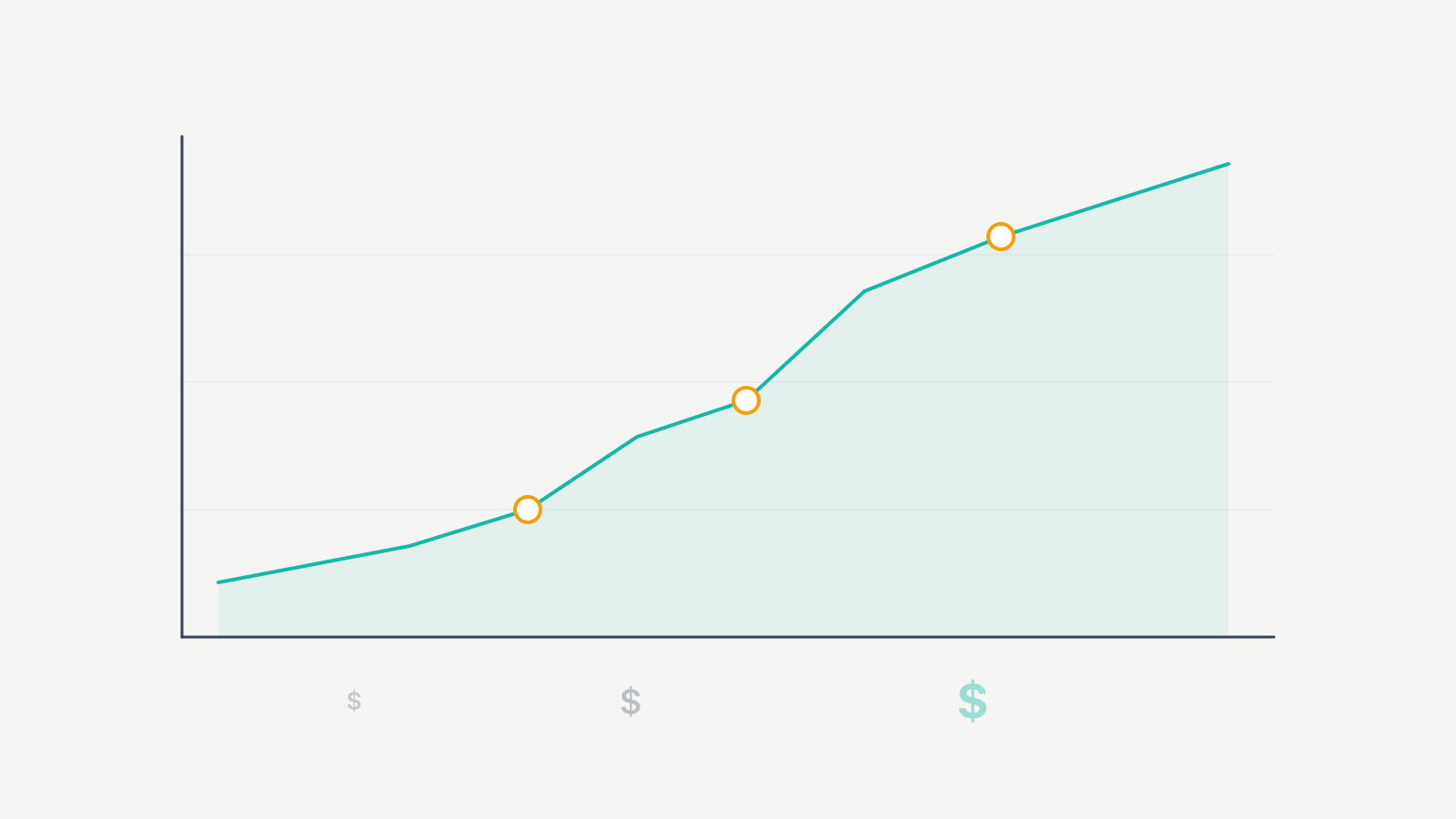
Flat rates in a growing business don’t mean “stable income.” They mean you’re earning less every year. Here’s why.
Inflation eats your margin. U.S. consumer prices rose about 4.5% a year on average from 2021 to 2025, roughly 24% in total, according to the Bureau of Labor Statistics CPI data. If your rate stayed at $100/hour from 2020 through 2025, your purchasing power dropped to roughly $80/hour in real terms. That’s a 20% pay cut you gave yourself without noticing.
Your value compounds faster than you think. Year 1 you build a site. Year 5 you build a site that loads in 1.2 seconds, converts 3x better, and ranks on page one. Year 10 you architect systems that run entire businesses. Charging the same rate at year 10 as year 1 is like a surgeon billing at intern rates after a decade of training.
Cheap rates attract cheap clients. The pattern is common: the clients paying the least are often the ones calling at 11pm, requesting unlimited revisions and questioning every invoice. Clients paying premium rates tend to trust your judgment, approve estimates without haggling and refer other quality clients. Higher rates don’t just mean more revenue. They mean better working conditions.
Burnout has a price tag. When you’re underpriced, you compensate by taking on more projects. Too many active clients at once means long weeks, B-minus work for everyone instead of A-plus work for fewer clients, projects that need rework and retainers that don’t renew. Underpricing ends up costing more than the revenue you were trying to protect.
Signs You’re Underpriced (With Numbers)
Not sure if it’s time? Run through this list. If 3+ apply, you’re overdue.
| Signal | What It Looks Like | What It Means |
|---|---|---|
| Fully booked for 3+ months | Turning away 2-3 inquiries per week | Demand exceeds supply. Price is the adjustment mechanism. |
| Zero rejection rate | Every prospect who hears your rate says yes | You’re leaving 20-40% on the table. Some “no” is healthy. |
| Resentment creeping in | Dreading client work you used to enjoy | Effort-reward imbalance. Your gut knows before your spreadsheet does. |
| Peers charging more | Similar experience, 30-50% higher rates | You’re subsidizing clients with your own income. |
| Clients say “you’re so affordable” | Multiple clients express surprise at your rates | They budgeted more. You charged less. That delta is your money. |
| Revenue flat despite more work | More hours, more clients, same bank balance | You’re trading time for less money each year. |
| Can’t afford business tools | Skipping software, training, or hiring help | Margins too thin to invest. The business is slowly starving. |
Most underpriced freelancers tick several of these boxes at once and still hesitate, because nobody gave them a framework for the raise. The next section is that framework.
How Much to Raise Your Rates
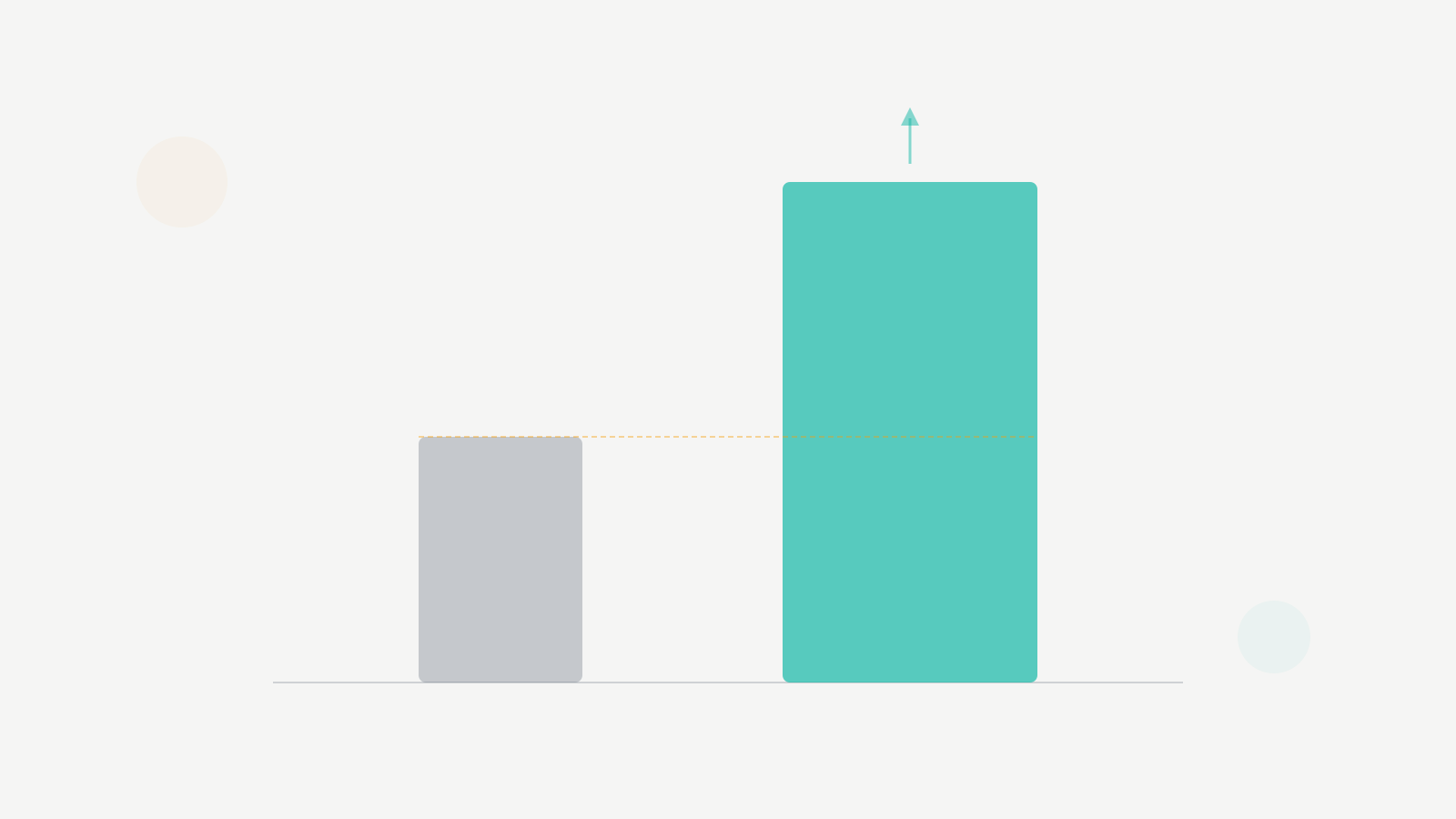
There’s no universal formula. But these 4 ranges cover most situations, from simply keeping pace with inflation to repricing around documented results.
Incremental raises: 10-20% annually. A 15% annual increase doubles your rate in about 5 years. That’s going from $100/hour to $200/hour, the difference between a $150K year and a $300K year at the same hours. A 15% step is small enough for most clients to absorb at renewal.
Market catch-up: 25-40% in one shot. If you’re significantly below market, you can’t 15% your way there. Say you have 8 clients paying $1,200/month each at $75/hour, or $9,600/month in total. You move to $110/hour (a 47% increase) and 1 client leaves. The 7 who stay now pay about $1,760/month each, or $12,320/month. Net result: about $2,700/month more revenue, 1 fewer client to manage, before you replace anyone.
Value-based leaps: 50%+ with evidence. This works once you’ve documented results, such as a site rebuild that measurably increased a client’s revenue over 12 months. When you can point to specific dollar outcomes, price resistance gets much weaker.
Inflation floor: 3-5% minimum. This isn’t even a real raise. It’s staying even. If you’re not doing at least this annually, you’re volunteering for a pay cut.
| Increase Type | Amount | When to Use | Expected Client Loss |
|---|---|---|---|
| Inflation match | 3-5% | Annually, no exceptions | 0% (clients expect this) |
| Incremental growth | 10-20% | Annual review, demand is strong | 5-10% of price-sensitive clients |
| Market catch-up | 25-40% | Significantly below market rate | 10-20% (plan for replacement) |
| Value-based leap | 50%+ | Documented outcomes justify premium | 15-25%, but revenue still increases |
The math always works the same way: even if you lose 20% of clients on a 40% rate increase, your revenue goes up 12% while your workload drops. Every. Single. Time.
New Clients: The Easy Path
Start here. New prospects have no reference point for your old rates.
Quote your new rate immediately. No “well, I used to charge…” No anchoring to old prices. Your rate is your rate. State it like you’d state your name. “My rate for this type of project is $X.” Period.
Track your acceptance rate. This is your market feedback loop. A simple spreadsheet is enough: prospect name, quoted rate, outcome. If 90%+ say yes, you’re underpriced. If 30-40% say yes, you’ve found your ceiling for now. The sweet spot is 50-70% acceptance: enough demand to stay busy, enough rejection to know you’re not leaving money behind.
Use pricing to shape your project mix. Projects you love? Quote standard rate. Projects you’d rather avoid? Quote 25-50% higher. Either you get paid well for work you don’t enjoy, or the prospect goes elsewhere. Both outcomes are wins.
No apology. Apologizing signals uncertainty. Quote your rate and follow it with “but I’m flexible,” and the client hears “negotiate me down.” Don’t volunteer discounts nobody asked for.
Existing Clients: The Conversation That Pays
This is where people freeze up. But here’s the thing… most existing clients expect prices to increase over time. They pay more for their office rent, their software, their employees. Your services aren’t exempt from economic reality.
Give 30-60 days notice. Minimum. 45 days is a sensible standard. It’s respectful, gives them time to adjust budgets, and frames you as professional. Sudden increases feel like ambushes.
Keep the explanation to one sentence. “My rates are increasing to $X effective October 25, 2026. This reflects [market rates / first increase in X years / expanded capabilities].” That’s it. Over-explaining signals you don’t believe the increase is fair. If you need a paragraph to justify it, you haven’t convinced yourself yet.
Time it after a win. Just delivered a project that drove results? Just got a glowing testimonial? That’s when you send the rate increase email. The client’s perception of your value is highest at that moment.
Consider grandfathering, with a deadline. For a long-running client, you can hold their current rate for 90 days past the general increase. But set a firm end date. “Your rate will align with current pricing on October 25, 2026.” Open-ended grandfathering is just a permanent discount with extra steps.
Always confirm in writing. Follow up every verbal conversation with an email. “Per our discussion, my rate for [service] increases to $X effective October 25, 2026. Looking forward to continuing our work.” Clean record. No ambiguity.
Handling Pushback Without Caving
Some clients will push back. Here’s what to say to the 4 objections you’ll hear most.
“It’s too expensive.” “I understand budget constraints. These rates reflect current market value. Would a reduced scope work within your budget?” The key: never drop rates without dropping scope. Price and scope move together.
“We’ve always paid X.” This one usually comes from long-standing clients. A good response: “You’re right, and I’ve valued our relationship through that time. The increase reflects that my capabilities and market rates have both grown significantly.” When the relationship is real, most clients stay.
“Other providers are cheaper.” “There are options at every price point. My rates reflect the specific results I deliver.” If they want to shop on price alone, let them. Some will come back after the cheap provider misses deadlines or delivers template work.
“We’ll have to find someone else.” This is the scary one. But the clients who leave over a fair, well-communicated increase are usually the ones paying the least and requiring the most hand-holding. Losing them frees up hours you can fill with higher-paying work, and some come back once they’ve compared the alternatives.
Not every objection needs to be overcome. Some clients leaving is the system working correctly.
When Clients Leave (And Why That’s Fine)
Losing a retainer client after a rate increase feels terrible for about a week. Then you run the numbers.
Say a $2,400/month retainer client takes 25 hours/month of your time, about $96/hour effective rate. If you replace them with a client paying $3,600/month for 18 hours of work, that’s a $200/hour effective rate. You gain $1,200/month in revenue and 7 hours/month of time back.
Departure creates capacity. You can’t add better clients without space for them. Every underpriced client occupying your calendar is blocking a higher-value client from getting in.
Don’t burn bridges. End graciously. “I understand and wish you well. Happy to recommend alternatives.” A client who leaves on good terms can still refer people to you, and those referrals start at your new rates.
Watch your departure rate. If 80% leave, something’s wrong: either the increase was too aggressive or you haven’t demonstrated enough value. If 10-20% leave, you’re in the healthy range. Under 5% departure means you didn’t raise enough.
Rate Increase Timeline: How Small Raises Compound
Here’s what a $100/hour rate looks like over 5 years under 4 different approaches. These are illustrative numbers, so plug in your own rate and run the same math.
| Year | Frozen rate (real value at 4% inflation) | +4% a year | +10% a year | +15% a year |
|---|---|---|---|---|
| 0 | $100/hr | $100/hr | $100/hr | $100/hr |
| 1 | $96/hr | $104/hr | $110/hr | $115/hr |
| 2 | $92/hr | $108/hr | $121/hr | $132/hr |
| 3 | $89/hr | $112/hr | $133/hr | $152/hr |
| 4 | $85/hr | $117/hr | $146/hr | $175/hr |
| 5 | $82/hr | $122/hr | $161/hr | $201/hr |
Read the last row. A frozen $100/hour rate is worth about $82/hour after 5 years of 4% inflation, while 15% annual raises take it to about $201/hour. That’s not magic. It’s 5 uncomfortable conversations, one a year.
Common Mistakes When Raising Rates
These are the mistakes that make rate increases harder than they need to be.
Mistake 1: Waiting years for the first increase. Every year at the old rate is income you don’t get back. Starting at $75/hour, 15% annual increases would put you at about $114/hour by year 3, with no single big jump to explain. Slow and steady beats dramatic and delayed.
Mistake 2: Apologizing during the conversation. An email that opens with “I’m sorry to have to tell you this, but…” is terrible framing. It positions the increase as bad news you’re inflicting on the client. Open with “I’m writing to share an update on our engagement” instead, and the same news reads as routine business.
Mistake 3: Grandfathering a client indefinitely. Keep a loyal client on rates from 3 years ago and you end up subsidizing the gap between their rate and your current one every single month. Loyalty is great. Permanent discounts aren’t loyalty. They’re bad business.
Mistake 4: Different rates for similar clients without logic. Two retainer clients doing similar work can drift to different rates when one increase slips through the cracks. Clients talk, sometimes at the same conference, and that creates an awkward conversation a consistent rate structure would have avoided.
Mistake 5: Raising rates during a rocky project. Announcing an increase while you’re still debugging a complex migration issue for the client is terrible timing. They feel like you’re charging more while delivering problems. Wait for the high point, not the low point.
Mistake 6: Not tracking the data. Without acceptance rates, client loss and revenue impact, every increase is a shot in the dark. A simple spreadsheet turns rate increases into data-driven decisions instead of anxiety-driven guesses.
Building Pricing Power Over Time
Rate increases get easier when you’ve built leverage. Here’s what actually moves the needle.
Specialize ruthlessly. “WordPress developer” competes on price with a huge pool of other WordPress developers. “WordPress performance architect for membership sites” competes on fit with a much shorter list. Narrow positioning helps the right clients find you, and it can raise your average project value before you touch your rates.
Document outcomes religiously. “Increased client revenue by $X in 12 months” justifies rates that “Built a WordPress site” cannot. After every project, capture revenue impact, traffic changes, conversion improvements and time saved. This evidence file is worth more than any portfolio.
Build a personal brand that pre-sells. When prospects come to you already expecting premium pricing, the rate conversation is easy. Inbound leads who already know your work are generally far less price-sensitive than cold outreach leads.
Maintain a waiting list. “I can take you in 6 weeks” signals value. “I’m available immediately” signals desperation. Aim to keep your calendar booked 4-6 weeks ahead. If you’re regularly available this week, your rates probably aren’t high enough.
Diversify revenue. Multiple income streams mean you’re never negotiating from desperation. A mix of retainer clients, project work and consulting works well. If any single client leaves, it’s uncomfortable but not catastrophic. That changes how you show up in rate conversations.
Select clients, don’t collect them. Work with clients who value quality over lowest price. They expect to pay well and don’t fight over reasonable rates. For keeping these clients long-term, see the complete guide to client retention.
The Rate Increase Playbook
Here’s a simple process you can repeat for every rate increase.
Step 1: Annual rate review (January). Compare current rates to market. Check acceptance rate on recent proposals. Calculate inflation adjustment. Assess demand: am I turning away work? This takes 30 minutes once a year.
Step 2: Set the new rate. Minimum: inflation match (3-5%). Standard: 10-15% if demand is strong. Aggressive: 20%+ if booked solid with a waiting list.
Step 3: New clients get new rates immediately. No transition period for people who haven’t worked with you before. Quote the new number from day one.
Step 4: Notify existing clients with 45 days notice. Short email. One sentence of context. Firm date. Written confirmation.
Step 5: Track everything. Acceptance rate on new proposals. Client retention rate. Revenue impact. Hours worked. This data makes the next increase easier because you’re working from evidence, not anxiety.
Step 6: Reassess after 90 days. Did the increase stick? Did revenue improve? Did workload balance shift? Adjust approach for next year.
The Mindset That Makes It Work
Pricing is psychological. For you and for clients.
You’re not taking. You’re exchanging. Higher rates for higher value. Every client who pays your new rate is getting a deal, because the value you deliver exceeds what they pay. If it didn’t, they wouldn’t stay.
Confidence is contagious. Clients sense hesitation. If you seem uncertain about your rates, they become uncertain about your capability. Practice the conversation out loud before you have it. Say “My rates are increasing to $110/hour effective March 1st” until it feels natural. It feels ridiculous the first few times. It works.
Scarcity mindset is the enemy. Fear of losing one client keeps people charging $75/hour for $200/hour work. There are always more clients. The ones you lose make room for the ones you deserve.
Each increase gets easier. The first rate increase email can take weeks of nerve to send. By the third or fourth, it’s a short email you draft and send in one sitting. The skill develops with practice, just like any other business skill.
The Bottom Line
If you haven’t raised rates in more than 12 months, you’re paying your clients to work for them. Start with new prospects this week. Notify existing clients within 30 days. Track the results. Repeat annually. The only rate increase you’ll regret is the one you didn’t do 2 years ago.
How do I know if I’m underpriced?
Run through the signals: fully booked for 3+ months, 0% rejection rate on proposals, resentment creeping into your work, peers charging 30-50% more for similar work, clients commenting you’re affordable, flat revenue despite more hours, and inability to invest in business tools. If 3+ apply, you’re overdue for an increase.
How much should I raise my rates?
Minimum: 3-5% annually just to match inflation. Standard: 10-20% when demand is strong. Market catch-up: 25-40% if you’re significantly below peers. Value-based leaps of 50%+ are justified when you can document specific revenue outcomes. A 15% annual increase doubles your rate in about 5 years.
How do I tell existing clients about rate increases?
Give 30-60 days advance notice. Keep the explanation to one sentence: ‘My rates are increasing to $X effective October 25, 2026.’ Time it after a successful project delivery. Always confirm in writing. Don’t apologize. Apologizing frames the increase as bad news you’re inflicting on the client.
What if clients push back on rate increases?
Hold your position and offer scope adjustments. ‘I understand budget constraints. Would a reduced scope work?’ Never drop rates without dropping scope. Expect a few departures, usually from your lowest-paying, highest-maintenance clients, and some of them come back after trying cheaper alternatives. Some departures are the system working correctly.
How often should I raise my rates?
Annually at minimum, even 3-5% to match inflation. Consider additional increases at milestones (new certifications, major project completions), when consistently overbooked, at contract renewals, or when market rates shift. Regular 10-15% annual increases compound dramatically: in 5 years, $100/hour becomes about $161/hour at 10% and about $201/hour at 15%.
Tell Google you want more of this.
Add Gatilab as a preferred sourceOne tap, and this site shows up more often in your own Top Stories, AI Overviews and AI Mode. Remove it any time.