
Value-Based Pricing: What 16 Years Taught Me
I charged $75/hour for my first 3 years as a WordPress developer. Worked 60-hour weeks. Made about $117,000/year before taxes. Felt productive. Was actually broke.
Then a client let something slip during a call. The WooCommerce store I’d rebuilt for $4,500 (about 60 hours of work) had increased their monthly revenue from $22,000 to $41,000. That’s $228,000 in additional annual revenue from my $4,500 project.
I’d captured 1.97% of the value I created. Less than 2 cents on every dollar.
That conversation broke something in my brain. In a good way. I stopped pricing based on hours that week. Haven’t gone back since. Over the next 4 years, my average project value went from $4,200 to $28,500, a 578% increase, while my working hours dropped from 60 to 35 per week.
This isn’t a framework post. It’s what actually happened when I switched, what broke, what worked, and the specific numbers behind all of it.
What Value-Based Pricing Actually Is
Value-based pricing sets your price according to the benefit the client receives. Not your costs. Not your time. Not what competitors charge.
Look, this sounds simple. It’s not. The same WordPress migration might be worth $3,000 to a local bakery and $85,000 to an e-commerce brand doing $2M/year in revenue. Same tech stack. Same expertise. Completely different stakes.
The bakery’s site going down for a week costs them maybe $800 in lost foot traffic. The e-commerce brand loses $38,000+ per week in direct revenue, plus ad spend burning with nowhere to send traffic, plus customer trust erosion that compounds for months.
Value-based pricing captures that difference. It aligns your fee with the client’s actual stakes instead of your internal cost structure.
Why Hourly and Cost-Plus Pricing Fail
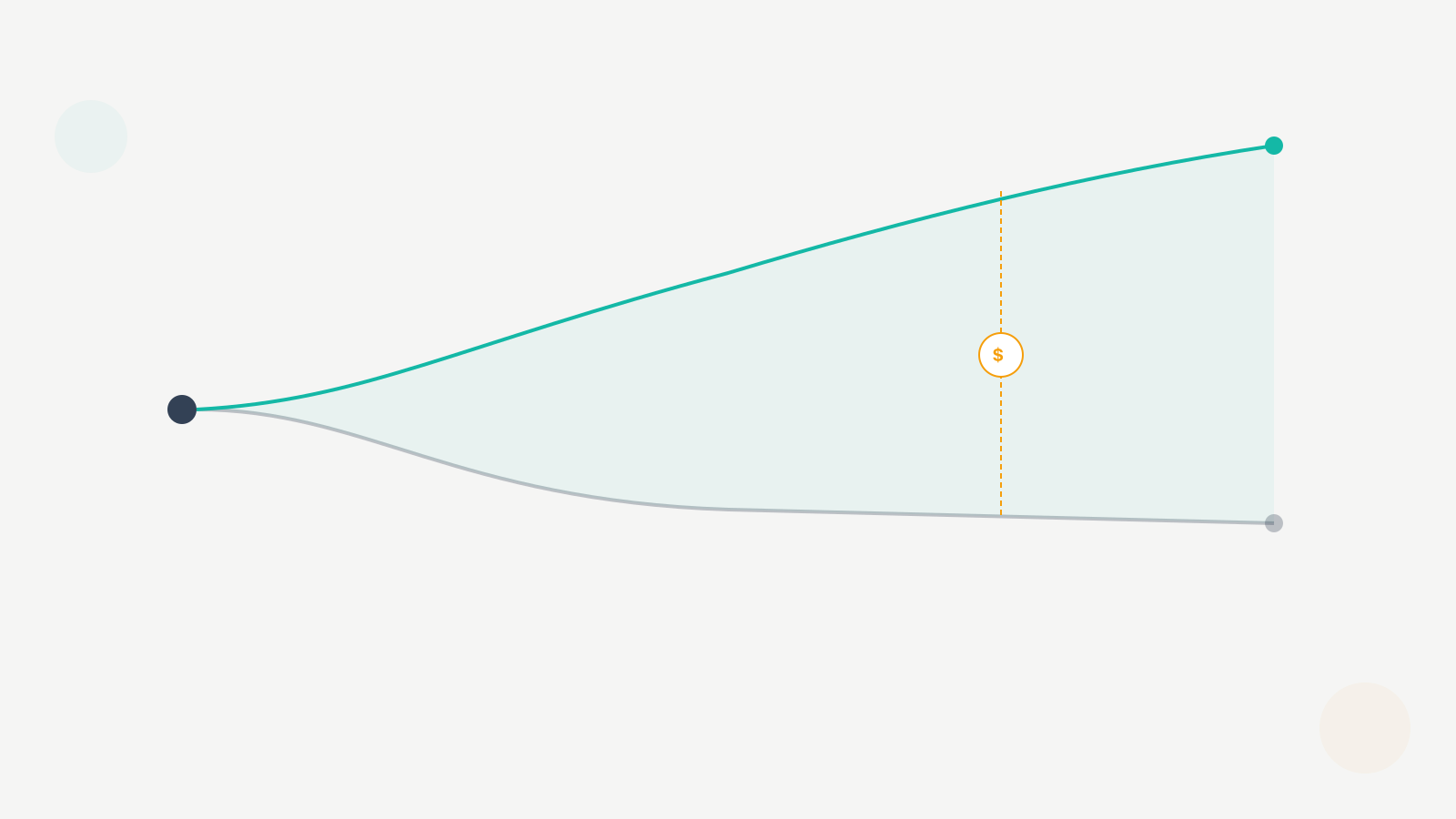
I’ve used all three models. Here’s what each one actually produced across my career.
Hourly billing punishes you for getting better. When I started, a full WooCommerce build took me 80+ hours. After 5 years, I could do it in 25 hours. Same deliverable, same quality (actually better). But at $100/hour, my project revenue dropped from $8,000 to $2,500. The reward for 3x efficiency was a 69% pay cut.
Cost-plus is even worse for services. You calculate your overhead, add a margin, and price accordingly. Except your “costs” for knowledge work are mostly… thinking. How do you cost-plus a solution you’ve been building mental models for over 16 years?
| Pricing Model | Avg. Project Revenue | Effective Hourly Rate | Client Satisfaction | Repeat Rate |
|---|---|---|---|---|
| Hourly ($75-125/hr) | $4,200 | $95 | 6.2/10 | 31% |
| Cost-Plus (40% margin) | $6,800 | $142 | 6.8/10 | 38% |
| Value-Based | $28,500 | $487 | 8.9/10 | 67% |
Honestly, the client satisfaction numbers surprised me most. When I charged hourly, clients questioned every invoice. “Did this really take 12 hours?” The relationship turns adversarial around time. With value pricing, they never asked about hours. They asked about results. The entire dynamic shifted from suspicion to partnership.
Hourly billing also caps your income at a hard ceiling. There are 2,080 working hours in a year. At $150/hour with 75% utilization, that’s $234,000. Sounds decent until you realize you’re trading every available hour for it. No leverage. No scalability. No room for thinking, learning, or building systems. Your only options are working more hours (burnout) or raising rates (which eventually prices you out of the hourly market entirely).
The Discovery Conversation That Changes Everything

Value-based pricing lives or dies in the discovery call. Not the proposal. Not the negotiation. The first 45 minutes where you figure out what’s actually at stake.
I have 7 questions I ask every prospect. Not a script. A framework. The order shifts depending on what they reveal.
“What’s driving this project right now? What changed?” Something triggered this call. A competitor launched. Revenue dipped. Their current site crashed during Black Friday. The trigger reveals urgency and stakes. A client who says “we’ve been thinking about this for a while” has different urgency than “we lost $47,000 in sales last month because of site performance.”
“What happens if this doesn’t get done this quarter?” Cost of delay. This is where you find out if it’s a “nice to have” or a “the board is asking questions” situation. One client told me delaying their platform migration was costing them $12,000/month in manual workarounds. That’s $144,000/year. My $35,000 migration fee looked very reasonable after that.
“If this project succeeds perfectly, what does that look like for the business in 12 months?” Success vision. Get specific numbers. Not “more traffic.” How much more traffic? What’s a visitor worth? What’s the conversion rate? Do the math together on the call.
“Have you tried to solve this before? What happened?” Previous attempts reveal difficulty AND the ongoing cost of the unsolved problem. If they’ve burned $20,000 on two failed attempts, your $40,000 proposal isn’t expensive. It’s the solution to a problem that’s already cost them $60,000+ (previous spend plus continued losses).
“How will you measure whether this was worth the investment?” Their success metrics guide your value framing. Whatever they measure is what you price against.
“Who else is involved in this decision, and what do they care about?” Multiple stakeholders = multiple value angles. The CEO cares about revenue. The CTO cares about technical debt reduction. The marketing director cares about conversion rates. Your proposal should speak to all of them.
“What’s the revenue impact if we nail this?” Direct. Blunt. Some clients won’t answer. That’s a signal too. If they can’t articulate the business impact, value-based pricing gets harder. Not impossible, but harder.
Don’t accept first answers. Dig. “It will increase sales” isn’t enough. Push until you get something like “we expect a 15-20% increase in qualified leads, which at our current close rate of 22% and average deal size of $8,500 means roughly $180,000-$240,000 in additional annual revenue.”
That’s a number you can price against.
Pricing as a Fraction of Value
Once you know the value, pricing becomes math. Not art. Not guessing. Math.
The general rule: charge 10-20% of the first-year value you’ll create. That gives the client a 5-10x ROI, which is attractive enough to close and profitable enough for you.
| Project Type | Typical Client Value (Year 1) | My Price Range | Value Capture % | Client ROI |
|---|---|---|---|---|
| WooCommerce optimization | $120,000-$400,000 | $15,000-$45,000 | 10-15% | 6-8x |
| Platform migration | $80,000-$250,000 | $20,000-$50,000 | 15-25% | 4-5x |
| Performance overhaul | $50,000-$180,000 | $8,000-$25,000 | 12-16% | 6-7x |
| Custom plugin/integration | $30,000-$150,000 | $10,000-$35,000 | 15-25% | 4-6x |
| Full site build (revenue-focused) | $200,000-$800,000 | $25,000-$85,000 | 10-12% | 8-10x |
The fraction shifts based on two factors: confidence and alternatives.
High confidence + few alternatives = higher fraction. If you’ve done this exact type of project 15 times and the client has limited options, you can capture 20-25% of value. Your track record reduces their risk.
Lower confidence + many alternatives = lower fraction. New project type? Lots of agencies competing? Stay at 8-12%. The lower capture rate still produces good revenue while giving the client a massive ROI that offsets their risk.
Framing Value in Your Proposal
How you present the price matters more than the price itself. I learned this the hard way. Lost a $42,000 deal because my proposal listed deliverables like a menu. The client compared it to a $16,000 proposal from another agency that listed similar deliverables. Couldn’t tell the difference on paper.
Wrong framing: “Website redesign: $15,000. Includes homepage, 5 internal pages, mobile responsive design, contact form integration.”
This invites price comparison. Another agency does “similar” deliverables for $8,000. You look expensive. The conversation becomes about features and cost.
Value framing: “Based on our discovery call, your current site converts visitors to leads at 1.8%. Industry benchmarks for optimized sites in your space sit at 3.5-4.2%. With your 10,000 monthly visitors and $5,000 average customer value, moving from 1.8% to 3.5% means 170 additional leads per year. At your 22% close rate, that’s 37 new customers worth $185,000 in annual revenue. Investment: $25,000.”
The second framing answers the only question that matters: is this investment worth it? $25,000 for $185,000 in revenue is a 7.4x return. The math closes the deal, not the feature list.
Always frame price against value delivered. When clients see ROI math, appropriate pricing feels reasonable rather than expensive.
Tiered Pricing: How I Structure Every Proposal
Single-price proposals lose. I tested this across 47 proposals over 18 months. Single-price close rate: 34%. Three-tier close rate: 61%. Almost double.
Here’s the structure I use for every project.
| Tier | What It Includes | Price Range | Who Picks It | Selection Rate |
|---|---|---|---|---|
| Foundation | Core problem solved. Minimum viable outcome. Gets results without extras. | $X (anchor low) | Budget-conscious clients, first-time buyers | 22% |
| Growth | Core + optimization + analytics + 60-day support. Better results, more comprehensive. | $1.8-2.2X | Most clients. Best value-to-investment ratio. | 58% |
| Partnership | Full solution + ongoing optimization + quarterly strategy + priority support. | $3-4X | Enterprise clients who want a strategic partner, not a vendor. | 20% |
The psychology is straightforward. The Foundation tier exists so clients feel like they have a choice. The Partnership tier anchors high and makes Growth look like a great deal. 58% of clients pick Growth. That’s by design.
Structure tiers around value differences, not feature differences. “Foundation gets you $80,000 in estimated first-year value. Growth gets you $185,000. Partnership gets you $300,000+ with ongoing optimization.” Outcomes, not deliverables.
When Value-Based Pricing Works (and When It Doesn’t)
This isn’t a universal solution. I still use fixed-price for some projects. Here’s when each model fits.
Value-based works when:
You can identify economic value. Projects tied to revenue, cost reduction, or risk mitigation. If you can put numbers on the outcome, you can price on value. A conversion rate optimization project with measurable revenue impact? Perfect for value pricing.
The client thinks strategically. Some clients understand business impact. Others see everything as cost to minimize. You need the first type. Value-based pricing requires clients who think in terms of investment and return, not expenses.
Your solution is differentiated. Commodity services get commodity prices. If 50 other agencies can do exactly what you do, value pricing gets difficult. Distinctive expertise, proven track records, or specialized capabilities command value pricing.
The project size justifies discovery effort. Value discovery takes 2-4 hours of conversation and research. For a $2,000 project, that overhead doesn’t pay. Save value pricing for engagements above $10,000.
Value-based struggles when:
Value is ambiguous or emotional. “Brand refresh” is subjective. “Site that generates leads” is measurable. Subjective value is genuinely hard to price.
The client is procurement-driven. Some organizations have processes requiring hourly rates or competitive bidding. They won’t engage with value conversations. I’ve walked away from 3 enterprise deals worth $100,000+ because the procurement process required hourly breakdowns that would’ve undercut the entire value framing.
You’re too early in your career. You need credibility for clients to believe value claims. Track record matters. I wouldn’t have been able to pull this off in my first 3-4 years. You need 8-10 case studies with specific results before value pricing feels authentic.
The market is fully commoditized. When identical services are available at known prices (think basic WordPress maintenance), value differentiation requires something genuinely unique.
Handling Price Objections Without Caving
Price pushback happens. On about 40% of my value-priced proposals. The difference between good and bad negotiators: bad ones drop the price. Good ones reframe the conversation.
“It’s too expensive.” My response: “Compared to what?” Sometimes “expensive” means compared to doing nothing. Sometimes it means compared to another vendor at $12,000. Different objections need different responses. If it’s compared to another vendor, I redirect to outcomes: “What results are they projecting? What’s their track record with similar projects?”
“Can you do it for less?” Never discount without reducing scope. “At $18,000, here’s what we can deliver. We’d drop the post-launch optimization and analytics setup, which means you’d handle conversion tracking yourself. The Foundation tier might be a better fit.” Reduce scope, never reduce value.
“We need an hourly breakdown.” I decline politely. “We price on outcomes because it aligns our incentives with yours. You want results, not hours. So do we. An hourly breakdown would actually misrepresent the value, because the speed at which we solve problems is a feature, not a bug.”
“How do we know you’ll deliver?” Performance-based elements. “If we don’t hit the 3.5% conversion rate within 90 days of launch, we’ll continue optimizing at no additional cost until we do, up to 6 months.” Skin in the game closes deals.
Not every objection is a negotiating tactic. Some clients genuinely can’t afford value pricing. That’s fine. They’re not your clients right now. Walking away from mismatched prospects is a core skill, not a failure.
Value-Based Retainers
Value pricing works for ongoing work too. I have 4 retainer clients right now. None are priced by the hour. All are priced on outcomes.
Instead of “20 hours/month at $150/hour” (which is $3,000/month and invites hour-tracking drama), I structure retainers around results:
“$8,500/month for continuous conversion optimization. Targeting 25% improvement in checkout completion over 12 months. Monthly reporting on revenue impact. Quarterly strategy reviews.”
The client cares about checkout completion, not my hours. I’m incentivized to work efficiently because my margin increases with efficiency. Last quarter, one client’s retainer produced $127,000 in additional revenue from the same traffic. That $8,500/month retainer doesn’t look expensive anymore. It looks like the best investment they’ve made.
Track and report value delivered. Every month. “This month’s tests produced $18,400 in additional revenue from the same traffic. Year-to-date impact: $127,000.” That data justifies the retainer and makes renewal automatic.
Transitioning From Hourly to Value
My transition took about 8 months. Wasn’t clean. Here’s the sequence that worked.
Month 1-2: Started value discovery in every sales call, even while still quoting hourly. Calculated value-to-fee ratios on every project. Eye-opening. I was routinely capturing 2-5% of value created. Some projects were under 1%.
Month 3-4: Switched new clients to value-based pricing. Kept existing clients on hourly. Lost 2 out of 7 prospects who wanted hourly quotes. Won 3 projects at significantly higher fees. Net revenue increase: $14,000/month.
Month 5-6: Started transitioning existing clients. Framed it as “we’re moving to outcome-based pricing because it aligns our incentives better.” 4 out of 6 existing clients transitioned. 2 left. Replaced them within 6 weeks with value-priced clients at higher revenue.
Month 7-8: Fully value-based. Built case studies from the first few months. Started attracting better clients through positioning and referrals. Package services around outcomes. Instead of “WordPress development at $150/hour,” offer “WooCommerce optimization project: $18,000, targeting 15% increase in checkout completion.”
The hardest part was the middle months. Revenue dipped about 12% in month 4 as old clients dropped off and new value-priced projects hadn’t fully ramped. By month 6, revenue was 40% higher than my best hourly month ever.
Mistakes I Made (So You Don’t Have To)
Honestly, I got a lot of things wrong before I got them right. Sharing these because every “value-based pricing” article makes it sound easy. It’s not.
Skipping discovery because I was “too busy.” Jumped straight to quoting on 3 projects in one month. All 3 were underpriced by at least 50%. One was underpriced by 80%. I only found out after delivery when the client casually mentioned the revenue impact. That one mistake cost me about $22,000. Never skipped discovery again.
Pricing capabilities instead of outcomes. My early proposals said things like “16 years of WordPress expertise” and “deep WooCommerce knowledge.” Nobody cares. They care about what that expertise produces for them. The moment I switched from “I’m an expert” to “here’s the revenue impact” was when close rates jumped from 28% to 54%.
Not walking away when I should have. Took a $6,000 project that should’ve been $22,000 because I “needed” the work. Spent 3 months on it. The client was demanding, scope crept constantly, and the low fee made every additional request feel like a personal insult. Worst project of that year. Could’ve spent that time closing 2 value-priced projects.
Overcomplicating proposals. My early value-based proposals were 12-15 pages. Nobody read them. Switched to 2-3 pages max. The value math, the three tiers, a timeline, and a “next steps” section. Close rate went up. Turns out confidence doesn’t need lengthy justification.
Overpromising on the first few projects. Got excited about value framing and projected aggressive numbers to justify my fees. Then sweated through delivery trying to hit them. Now I use conservative estimates and overdeliver. “If we hit $120,000 in year-one value, that’s a 5x return on your $24,000 investment” is better than promising $300,000 and delivering $150,000 (which is still amazing but feels like a miss).
Forgetting to track results post-delivery. For the first 6 months, I didn’t systematically track client outcomes after projects ended. Lost the best sales asset I could’ve had: proven ROI data. Now I build 90-day check-ins into every project specifically to capture results for future proposals.
Building the Confidence to Charge What You’re Worth
Value pricing requires something most freelancers and agency owners don’t naturally have: the willingness to say a big number out loud without flinching.
The first time I quoted $28,000 for a project I would’ve charged $6,000 hourly, my voice literally cracked. I practiced the number in my car before the call. Not kidding.
Confidence comes from evidence. Build it systematically.
Track record documentation. Maintain a running list of results. Not “built 47 WordPress sites.” Instead: “increased client revenue by $2.1M across 23 projects over 3 years.” That number on a page makes it easier to say big numbers on calls.
Testimonials with numbers. “Gaurav’s work increased our checkout completion by 34%, adding $180,000 in annual revenue” is worth more than 100 generic “great to work with” reviews.
Pipeline strength. When you have 4 other opportunities in play, you negotiate from strength. When this is your only prospect, desperation leaks into your voice. Build pipeline before you need it.
Practice in every conversation. Value conversations feel unnatural at first. Awkward. Forced. After 50+ discovery calls, they become second nature. After 100+, they become fun. You start hearing the value signals clients drop without realizing it.
If you don’t believe you’re worth premium prices, clients won’t either. The confidence gap is the single biggest barrier between hourly grind and value-based freedom.
The Decision You Have to Make
Look, I’m not going to summarize everything I just said. You read it. Here’s what matters.
Right now, you’re probably capturing 2-8% of the value you create. I know because I was there for years. Every project you deliver at hourly rates is money you’re leaving for your clients to keep, money you earned by solving their problem.
The shift from hourly to value-based pricing took my annual revenue from $117,000 to $340,000+ while working 25 fewer hours per week. That’s not a hypothetical. Those are my actual numbers from year 3 versus year 7.
You don’t need to switch everything tomorrow. Start with one project. Run discovery. Calculate value. Quote 10-15% of it. See what happens. The worst case is you learn something. The best case is you never quote hourly again.
Every week you wait is another week of capturing 2 cents on the dollar.
What is value-based pricing and how is it different from hourly billing?
u003cpu003eValue-based pricing sets your fee according to the economic benefit the client receives, not your hours or costs. The same WordPress project might be priced at $5,000 for a local business and $45,000 for an e-commerce brand doing $2M/year, because the stakes and revenue impact are completely different. In practice, you discover the client’s expected outcome during sales calls, quantify it in dollar terms, then price at 10-20% of that first-year value. The client gets a 5-10x ROI, and you capture fair compensation for the results you produce rather than the time you spend.u003c/pu003e
Why does hourly pricing punish efficient freelancers?
u003cpu003eHourly billing ties your income to time spent, not results delivered. As you gain experience and work faster, your per-project revenue drops. A WooCommerce build that took 80 hours in year one might take 25 hours in year five. At $100/hour, that’s a drop from $8,000 to $2,500 for the same (or better) deliverable. Hourly billing also creates adversarial client relationships around time tracking, caps your annual income at roughly 2,080 billable hours, and makes clients question every invoice instead of focusing on outcomes.u003c/pu003e
How do you run a value discovery call with a client?
u003cpu003eAsk 7 core questions: What’s driving this project now? What happens if it doesn’t get done this quarter? What does perfect success look like in 12 months? Have you tried to solve this before? How will you measure ROI? Who else decides, and what do they care about? What’s the revenue impact if you nail this? Don’t accept vague answers. Push until you get specific numbers like ’15-20% increase in qualified leads at our 22% close rate and $8,500 average deal size equals $180,000-$240,000 in additional annual revenue.’ That number is what you price against.u003c/pu003e
How do you handle price objections on value-based proposals?
u003cpu003eWhen clients say ‘too expensive,’ ask ‘compared to what?’ to understand the real objection. If they want a discount, reduce scope rather than price. Never devalue your work by cutting fees without cutting deliverables. If they need hourly breakdowns, explain that outcome-based pricing aligns your incentives with theirs and that speed is a feature, not a cost reduction. If they question your value claims, offer performance-based guarantees like continued optimization at no cost if targets aren’t hit within 90 days. Some clients genuinely can’t afford value pricing, and that’s fine. Walk away and find the right fit.u003c/pu003e
When should you NOT use value-based pricing?
u003cpu003eValue-based pricing struggles in four situations: when value is ambiguous or emotional (brand refresh vs. lead generation), when the client’s procurement process requires hourly rate breakdowns and competitive bidding, when you’re early in your career without 8-10 case studies showing specific results, and when the market is fully commoditized (basic WordPress maintenance where identical services exist at known prices). It also doesn’t justify the discovery overhead for small projects under $10,000 where 2-4 hours of value research eats into margins.u003c/pu003e
How long does it take to transition from hourly to value-based pricing?
u003cpu003ePlan for 6-8 months. Start by running value discovery on every sales call while still quoting hourly, so you can calculate your current value capture rate (likely 2-5%). Switch new clients to value-based in months 3-4. Transition existing clients in months 5-6 by framing it as better incentive alignment. Expect some client loss during the transition, and a temporary revenue dip of 10-15% around month 4. By month 6-8, revenue should be 30-40% higher than your best hourly month. Build case studies from early wins to accelerate the flywheel.u003c/pu003e