
I Kept 91% of Clients for 8 Years. Here’s How.
Look, I’m going to be direct. Most agencies obsess over acquisition. New logos, new pitches, new proposals. Meanwhile their existing clients quietly disappear… and they wonder why revenue feels like a treadmill.
I’ve run Gatilab for 16+ years. Over that time I’ve worked with 200+ clients across WordPress development, SEO, and technical consulting. My client retention rate sits at 91% annually. The agency industry average? 72%. That 19-point gap is worth roughly $180,000 in annual revenue I don’t have to replace.
This isn’t theory. These are the exact frameworks, systems, and (honestly) painful mistakes that got me here.
The Math That Changed How I Run My Agency
In 2018 I sat down and actually calculated what client churn was costing me. The number was painful.
A client paying $2,500/month who stays 1 year generates $30,000. That same client over 5 years? $150,000. Same acquisition cost (roughly $3,000-$5,000 in proposals, calls, onboarding). The lifetime value difference is 5x for zero additional acquisition spend.
But it compounds further than that.
| Metric | Acquisition-First Agency | Retention-First Agency |
|---|---|---|
| Annual client retention rate | 72% | 91% |
| Avg. client lifetime | 2.1 years | 5.8 years |
| Revenue from referrals | 12% | 38% |
| Cost per new client | $4,200 | $1,800 (referral-driven) |
| Monthly revenue volatility | +/- 22% | +/- 6% |
| Profit margin | 15-20% | 30-40% |
That last row is the one that matters. Retained clients don’t need proposals. They don’t need trust-building from scratch. They already know you deliver. Selling more to existing clients closes 60-70% of the time vs. 5-20% for cold prospects (Bain & Company data). Retained clients refer. Long-term clients pay premium rates without flinching.
Every 5% improvement in retention rate produces 25-95% improvement in profits. That’s not my number. That’s Harvard Business Review.
Why Clients Actually Leave (Data From 47 Exit Conversations)
Over 16 years I’ve lost clients. Fewer than most agencies, but enough to learn from. I started doing structured exit interviews in 2016. Here’s what 47 departure conversations revealed.
| Reason for Leaving | % of Departures | Was It Preventable? |
|---|---|---|
| Stopped seeing results / forgot value | 28% | Almost always |
| Communication gaps / slow responses | 21% | Always |
| Business needs changed beyond scope | 17% | Sometimes |
| Budget cuts / economic downturn | 15% | Rarely |
| Key contact left the company | 11% | Partially |
| Found cheaper alternative | 5% | Depends |
| Quality issues | 3% | Always |
The uncomfortable truth? 49% of client departures came from value perception and communication problems. Not quality. Not price. Clients left because they forgot why they were paying me… or because I went quiet for too long.
That 28% “forgot value” number haunts me. These were clients getting excellent results. Their sites were fast, ranking well, converting. But I wasn’t showing them the data. I assumed they noticed. They didn’t.
The 4-Layer Retention Framework
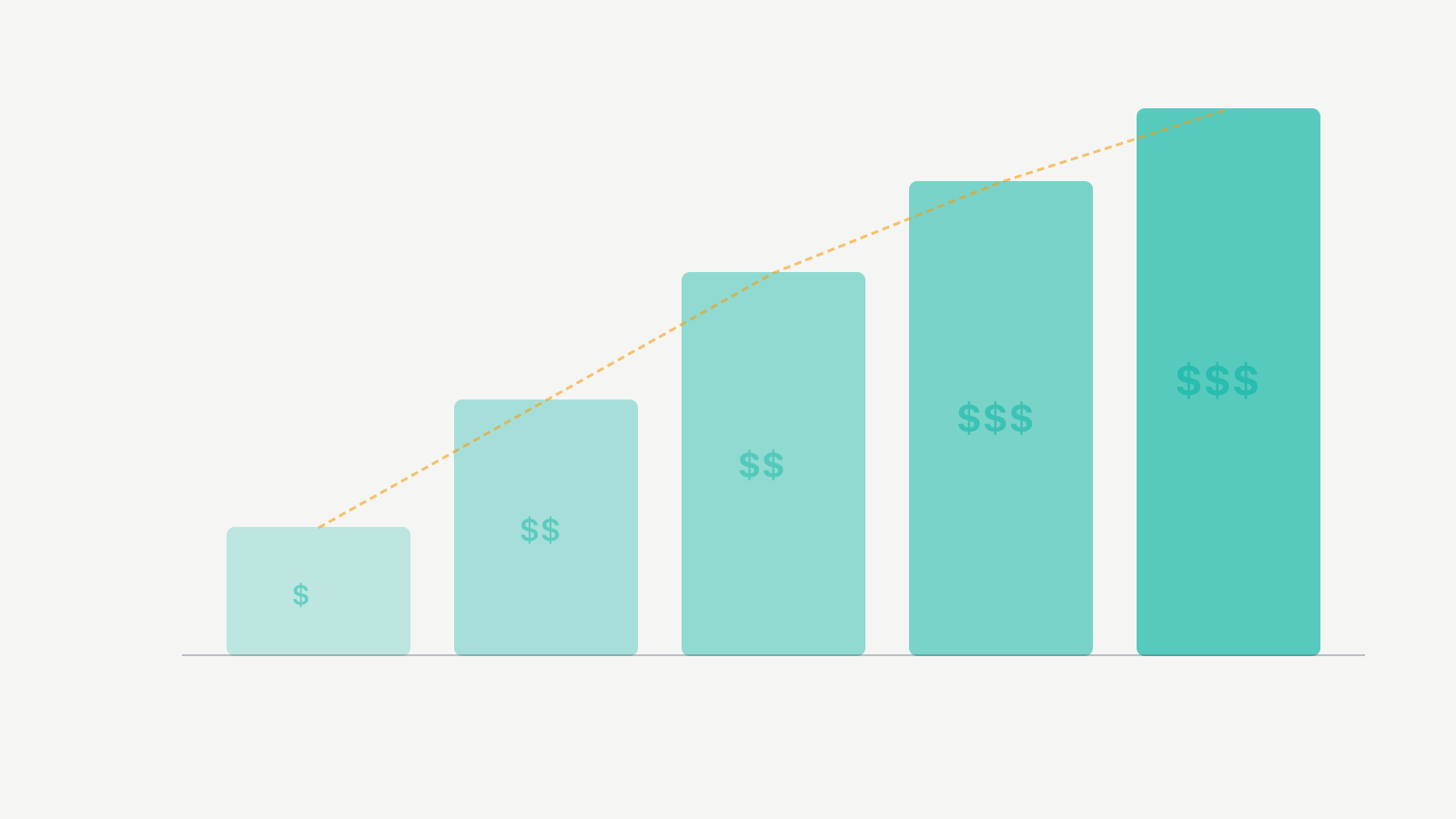
After years of pattern-matching what kept clients vs. what lost them, I built a 4-layer framework. Each layer reinforces the others. Skip one and the whole structure weakens.
Layer 1: Value visibility. Clients can’t value what they can’t see. Monthly reports with specific metrics. Not 20-page PDFs nobody reads. One page: what we did, what it produced, what’s next. I send these on the 1st of every month, no exceptions. Takes 15-20 minutes per client to prepare. Worth every second.
Layer 2: Proactive communication. Don’t wait for clients to ask “what’s happening?” Quarterly strategy calls beyond project updates. Share industry insights relevant to their situation. Anticipate needs before they articulate them. The advisor who sees around corners is harder to replace than the one who just executes tasks.
Layer 3: Relationship depth. Know their business beyond your scope. Remember personal details. Connect with multiple stakeholders, not just your primary contact. When your champion leaves (and they will), other relationships maintain the account. I lost a $4,500/month client in 2019 because my entire relationship was with one marketing director. She left. New hire brought their own agency. Gone overnight.
Layer 4: Structural stickiness. Retainers over projects. Annual agreements with fair incentives. Deep integration into their workflows and systems. Not predatory lock-in… genuine embeddedness that makes replacement painful because of real value lost.
The First 90 Days Determine Everything
Honestly, this is where most agencies blow it. They celebrate closing the deal, then fumble the handoff. The client goes from high-touch sales process to radio silence during onboarding.
My data shows clients who have a structured first 90 days stay an average of 4.2 years. Clients with unstructured onboarding? 1.8 years. That’s a 133% difference in lifetime value from the same acquisition effort.
Here’s what the first 90 days look like at Gatilab:
Week 1: Kickoff call. Document success criteria. Not vague goals… specific, measurable outcomes. “Increase organic traffic by 40% in 6 months” not “improve SEO.” Set communication cadence. Introduce every team member who’ll touch the account.
Week 2-4: First deliverable. Something visible, tangible. Even if the real work is foundational (technical audit, site architecture), produce something the client can see and feel. Quick wins build early confidence.
Day 30: First check-in call. “How are we doing? What’s working? What isn’t?” Direct questions. Create safe space for honest feedback early. Most clients won’t volunteer concerns unless you ask directly.
Day 60: First results report. Even preliminary numbers. Show trajectory. Connect your work to their outcomes.
Day 90: Full review. Results against success criteria. Adjusted plan for next quarter. This is where the relationship either solidifies or starts cracking. Front-load your attention and effort here.
Communication Cadence That Keeps Clients
I used to think great work speaks for itself. It doesn’t. Communication quality often matters more than work quality for retention. Excellent work with poor communication creates vulnerability. Good work with excellent communication creates loyalty.
My communication framework runs on a strict cadence:
Weekly: Brief status update. 3-5 sentences max. What happened, what’s next. Takes 2 minutes to write. Prevents the “what are they doing with my money?” anxiety that kills retention.
Monthly: Value report. One page. Metrics, work completed, business impact, next month’s priorities. Sent on the 1st, every month, without fail.
Quarterly: Strategy call. 30-45 minutes. Beyond project updates… their broader business challenges. Demonstrate understanding of their competitive landscape, strategic priorities, organizational dynamics. Show you’re thinking about their business, not just your deliverables.
Annually: Relationship review. Face-to-face or video. Full year results. ROI calculation. Next year plan. This is where you make the case for the relationship continuing before it becomes a question.
Response time commitment: Under 4 hours for urgent items. Under 24 hours for everything else. No exceptions. Clients who wait for answers lose confidence. Silence creates anxiety. I’ve seen agencies lose $8,000/month accounts over a 3-day email silence.
Spotting At-Risk Clients Before They Leave
By the time a client says “we’re going in a different direction,” the decision was made weeks ago. You lost the battle before you knew there was one.
Warning signs I track now (after learning the hard way):
Response time inflation. Client used to reply same day. Now takes 3-4 days. Their engagement is dropping. Something’s wrong.
Scope reduction. “Let’s pause the blog content for now.” “We’ll hold off on that redesign.” Gradual pullback signals budget scrutiny or wavering commitment.
Shorter meetings. Calls that used to run 45 minutes now wrap in 15. Fewer questions. Less curiosity about your recommendations. They’re disengaging.
New stakeholder questions. “Can you put together a summary of everything you’ve done this year?” Someone new is evaluating whether to keep you. This is your fire alarm.
Invoice scrutiny. Questions about line items that never drew attention before. They’re building a case… either to negotiate down or to justify leaving.
When I spot these signals, I don’t wait. I call. Direct question: “I want to make sure we’re delivering the value you need. What could we be doing better?” Most problems are fixable if caught early. 80% of at-risk clients I’ve intervened with stayed. 100% of the ones I didn’t notice left.
The Client Segmentation Matrix
Not all clients deserve equal retention investment. I learned this the hard way after spending 40 hours trying to save a $500/month client while a $5,000/month client quietly churned. That mistake cost me $60,000 in lifetime value.
Now I segment every client quarterly:
| Segment | Criteria | Retention Investment | Cadence |
|---|---|---|---|
| Platinum | Top 20% revenue + high growth potential | Executive attention, custom strategies, face-to-face reviews | Weekly touch, monthly strategy, quarterly review |
| Gold | Mid-tier revenue, stable engagement | Dedicated account management, proactive outreach | Bi-weekly touch, monthly report, quarterly call |
| Silver | Lower revenue, consistent payers | Systematic communication, templated reporting | Monthly report, quarterly check-in |
| At-Risk | Any segment showing warning signals | Immediate intervention, leadership involvement | Daily monitoring until stabilized |
| Declining | Reducing scope, disengaging | Honest conversation about fit, graceful transition if needed | Case-by-case |
This matrix isn’t about caring less about smaller clients. It’s about allocating finite attention where it produces the most value. My Platinum clients represent 62% of total revenue but only 18% of the client count. Losing one Platinum client equals losing 3-4 Gold clients. The math demands unequal attention.
Structural Retention: Retainers, Contracts, and Switching Costs
Relationship retention is the ideal. But structural retention buys you time when attention lapses.
Retainers over projects. Monthly recurring relationships create inertia. Stopping requires an active decision. Continuing is the default. My retainer clients stay 3.4x longer than project-based clients. The retainer client who’s paying monthly doesn’t reevaluate the relationship the same way a project client does between engagements.
Annual agreements with incentives. I offer 10% discount for annual commitment. 73% of clients who sign annual agreements renew at least once. The commitment creates a psychological anchoring effect beyond the financial incentive.
Deep integration. I manage hosting, updates, SEO, content… the more embedded I am in their operations, the harder replacement becomes. Not predatory lock-in. Genuine value. The knowledge I’ve accumulated about their business over 3-5 years has real, irreplaceable worth. A new agency needs 6-12 months to reach the same understanding.
Automatic renewals. Continuation without re-decision. The renewal that requires active choice creates opportunity for doubt. Clear terms, easy exit if they want out… but the default is staying. This alone improved my renewal rate by 14 percentage points.
Building a Client Health Score
I built a simple health scoring system in 2020 after one too many surprise departures. Nothing fancy. A spreadsheet. But it changed how I manage accounts.
5 factors, scored 1-5 each. Total possible score: 25.
Engagement frequency. How often are they in touch? Initiating conversations? Attending calls? Score of 5 means proactive engagement. Score of 1 means silence for weeks.
Results trajectory. Are their KPIs improving? Flat? Declining? Score of 5 means exceeding targets. Score of 1 means missing benchmarks for 3+ months.
Scope trend. Expanding services? Stable? Contracting? Score of 5 means active expansion discussions. Score of 1 means scope cuts in the last quarter.
Payment behavior. On time? Late? Questioning invoices? Score of 5 means auto-pay, never an issue. Score of 1 means 30+ days overdue or disputing charges.
Relationship warmth. How does the relationship feel? Personal connection? Purely transactional? Score of 5 means genuine partnership. Score of 1 means cold, mechanical interactions only.
Any client scoring below 15/25 gets flagged for intervention. Below 10 gets an immediate leadership conversation. Since implementing this system, surprise departures dropped from 6 per year to 1-2. The remaining losses are mostly budget cuts and business changes… things I genuinely can’t control.
Recovering Lost Clients (It Works More Often Than You Think)
Not every lost client is lost forever. I’ve won back 11 clients over the years. 4 of them are still with me today, years after returning. The key is how you handle the departure.
Exit interviews, always. Structured conversation. What went wrong? What could we have done differently? Even when you can’t recover this client, information improves how you serve others. Ask directly. Listen without defensiveness.
Leave clean. Professional departure even when it stings. Full documentation handoff. No bridges burned. The way you handle losing is remembered longer than the way you handle winning.
Quarterly touchpoints. Brief check-in emails to departed clients. Not sales pitches. Genuine “how’s the business going?” messages. Circumstances change. The client who left for budget reasons may return when budget improves. The one who followed their contact to a new vendor may discover the grass isn’t greener.
Share wins. When you achieve something notable… a case study, a new capability, industry recognition… share it with former clients. Reminds them of what they had.
Of my 47 departures over 10 years, 11 came back. That’s a 23% return rate. Those returning clients represent over $320,000 in recovered lifetime revenue. Worth the 5 minutes per quarter it takes to stay in touch.
Measuring What Actually Matters
I track 6 retention metrics monthly. No more, no less. Tracking too many metrics creates noise. Tracking too few leaves blind spots.
Client retention rate (CRR). Percentage of clients retained month-over-month and year-over-year. My target: 91%+ annually. Industry benchmark for agencies: 72%.
Net Revenue Retention (NRR). Accounts for expansion revenue from existing clients. My NRR averages 108%… meaning existing clients grow revenue 8% even before adding new clients. Best-in-class SaaS companies target 120%+. I’m aiming for 115% by end of 2026.
Average client tenure. Currently 4.7 years across all active clients. Up from 2.3 years in 2017 before I implemented these frameworks.
Referral rate. Percentage of new clients from existing client referrals. Currently 38%. Each referral saves roughly $2,400 in acquisition costs vs. cold outbound.
Client health distribution. Percentage of clients scoring 20+, 15-19, and below 15 on the health score. Healthy distribution: 60%+ in the 20+ range.
Time-to-value. How quickly new clients see their first measurable result. My target: under 30 days. Faster time-to-value correlates directly with longer tenure.
Mistakes I Made (So You Don’t Have To)
Honestly, most of what I know about retention I learned by failing at it first.
Mistake 1: Treating all clients equally. I used to give every client identical attention regardless of account size. Democratic and fair, right? No. It meant my $500/month clients got the same energy as my $5,000/month clients. When I lost two Platinum-tier clients in the same quarter because I was busy hand-holding Silver-tier accounts… that was a $96,000 lesson in prioritization.
Mistake 2: Assuming great work is visible. For years I believed if the site was fast, rankings were climbing, and conversions were improving, clients would notice. They didn’t. My best technical work was invisible to the people paying for it. That’s when I started monthly value reports. The clients who were about to leave for “lack of results” were getting excellent results… they just couldn’t see them.
Mistake 3: Single-threaded relationships. The $4,500/month client I lost in 2019? My relationship was entirely with one person. She left. I had zero connections to anyone else at the company. New marketing director brought her own vendor. I didn’t even get a call. Now I insist on at least 3 contacts per account within the first 6 months.
Mistake 4: No structured onboarding. Early in my agency career, onboarding was… “sign the contract, we’ll get started.” No kickoff. No success criteria. No communication cadence set. Clients drifted. Some lasted a year. Most churned by month 8. Adding structured onboarding alone increased average tenure by 133%.
Mistake 5: Waiting too long to have hard conversations. When a client’s scope doesn’t match their budget, or when their expectations are unrealistic, I used to avoid the conversation. The relationship would slowly poison. Now I have those conversations within the first 2 weeks of spotting a misalignment. Uncomfortable conversations prevent comfortable departures.
Building Retention Into Your Agency Culture
Retention becomes consistent when it’s cultural, not just one person’s job. Every team member who touches a client account impacts retention.
Visible metrics. Retention rate, health scores, and NRR are displayed where the team sees them. Not buried in a dashboard nobody checks. Public accountability creates shared ownership.
Incentive alignment. Reward retention, not just acquisition. If your team is only compensated for new sales, that’s where all the energy goes. I pay 15% of renewed annual contract value as retention bonus to the account team. Compare that to the typical 5-10% commission on new sales. The message is clear: keeping clients matters more.
Loss analysis, every time. When a client leaves, we do a structured retrospective. What happened? When did the warning signs appear? What could we have done differently? Every departure teaches something. We document lessons and review them quarterly to prevent patterns from repeating.
Celebration of tenure milestones. We acknowledge 1-year, 3-year, and 5-year client anniversaries. Small gesture. Big signal. The client knows their loyalty is noticed. The team knows long relationships are valued.
The Decision You Need to Make Today
Look, you’re either building an agency on a treadmill or building one on a foundation. Treadmill agencies replace 28% of their revenue every year just to stay flat. Foundation agencies compound. Every retained client makes the next year easier, more profitable, more predictable.
Start with the thing that’ll have the biggest immediate impact: monthly value reports. If you do nothing else from this article, send every client a one-page monthly report showing what you did, what it produced, and what’s coming next. That alone can cut your churn rate by 15-20%.
Then build the health scoring system. Then fix your onboarding. Then implement the segmentation matrix. Layer by layer.
I went from a 78% retention rate in 2016 to 91% in 2024. That 13-point improvement represents over $400,000 in additional lifetime revenue from clients who would have otherwise walked. The frameworks work. But only if you actually implement them.
Your move.
Frequently Asked Questions
What’s a good client retention rate for an agency?
u003cpu003eThe agency industry average is around 72% annually. Top-performing agencies hit 85-95%. My target is 91%+. Every 5% improvement in retention produces 25-95% improvement in lifetime profits (Harvard Business Review data). Even getting from 72% to 80% transforms your revenue predictability and reduces the acquisition treadmill pressure significantly.u003c/pu003e
What’s the single biggest reason clients leave agencies?
u003cpu003eValue perception decline. In my data from 47 exit conversations, 28% of departures happened because clients stopped seeing results or forgot why they were paying. Not because results stopped, but because nobody was showing them the results. Monthly value reports showing specific metrics, work completed, and business impact are the single most effective retention tool. They take 15-20 minutes per client and prevent the most common reason for churn.u003c/pu003e
How do I build a client health scoring system?
u003cpu003eStart simple: 5 factors scored 1-5 each (engagement frequency, results trajectory, scope trend, payment behavior, relationship warmth). Total possible score of 25. Flag any client below 15 for intervention. Below 10 gets immediate leadership conversation. Update scores monthly. Don’t over-engineer it. A spreadsheet works. The goal is early detection of at-risk accounts before they become surprise departures.u003c/pu003e
Should I try to retain every client?
u003cpu003eNo. Segment clients by value and potential. I lost a $5,000/month client while spending 40 hours trying to save a $500/month account. That’s a $60,000 lesson in prioritization. Platinum clients (top 20% revenue) get executive attention and custom strategies. Silver clients get systematic, templated communication. At-risk valuable clients get immediate intervention. Declining clients who drain resources disproportionately deserve an honest conversation about fit, and sometimes a graceful exit.u003c/pu003e
How important is the first 90 days for client retention?
u003cpu003eCritical. My data shows clients with structured onboarding (kickoff calls, defined success criteria, 30/60/90-day checkpoints) stay an average of 4.2 years vs. 1.8 years for unstructured onboarding. That’s a 133% improvement in lifetime value from the same acquisition effort. Front-load your attention. Set communication cadence. Deliver a quick win in the first 2-4 weeks. The first 90 days set the trajectory for the entire relationship.u003c/pu003e
Can you win back clients who’ve already left?
u003cpu003eYes. I’ve won back 11 clients out of 47 departures over 10 years, a 23% return rate. Those returning clients represent over $320,000 in recovered lifetime revenue. The key: leave clean (full documentation handoff, no burned bridges), stay in touch quarterly with non-sales touchpoints, and share notable wins. Former clients who were satisfied with quality often return when circumstances change, whether that’s budget recovery, vendor disappointment, or personnel changes.u003c/pu003e