
I Lost $18,400 to Scope Creep. Here’s the Fix.
In 2019, I quoted a client $8,500 for a WordPress site. 6 pages. WooCommerce. Standard build. 4 weeks.
By week 3, the project had grown to include a CRM integration, a custom reporting dashboard, email automation setup, and an “ongoing maintenance agreement” that was never in the proposal. Same $8,500. Same 4-week deadline.
I worked nights. Weekends. Delivered everything. Tracked my hours after the fact… 187 hours. That’s $45.45/hour on a project I’d estimated at 60 hours. Effectively, I donated $18,400 in free labor. The client still seemed disappointed.
That project broke something in how I thought about client work. And honestly, it should’ve happened sooner. I’d been absorbing scope creep for years without even naming it.
Since then, I’ve run 200+ client projects through Gatilab. Scope creep rate dropped from roughly 70% of projects to under 12%. Not because clients changed. Because I built systems.
Here’s every system, script, and number I’ve got.
What Scope Creep Actually Costs You
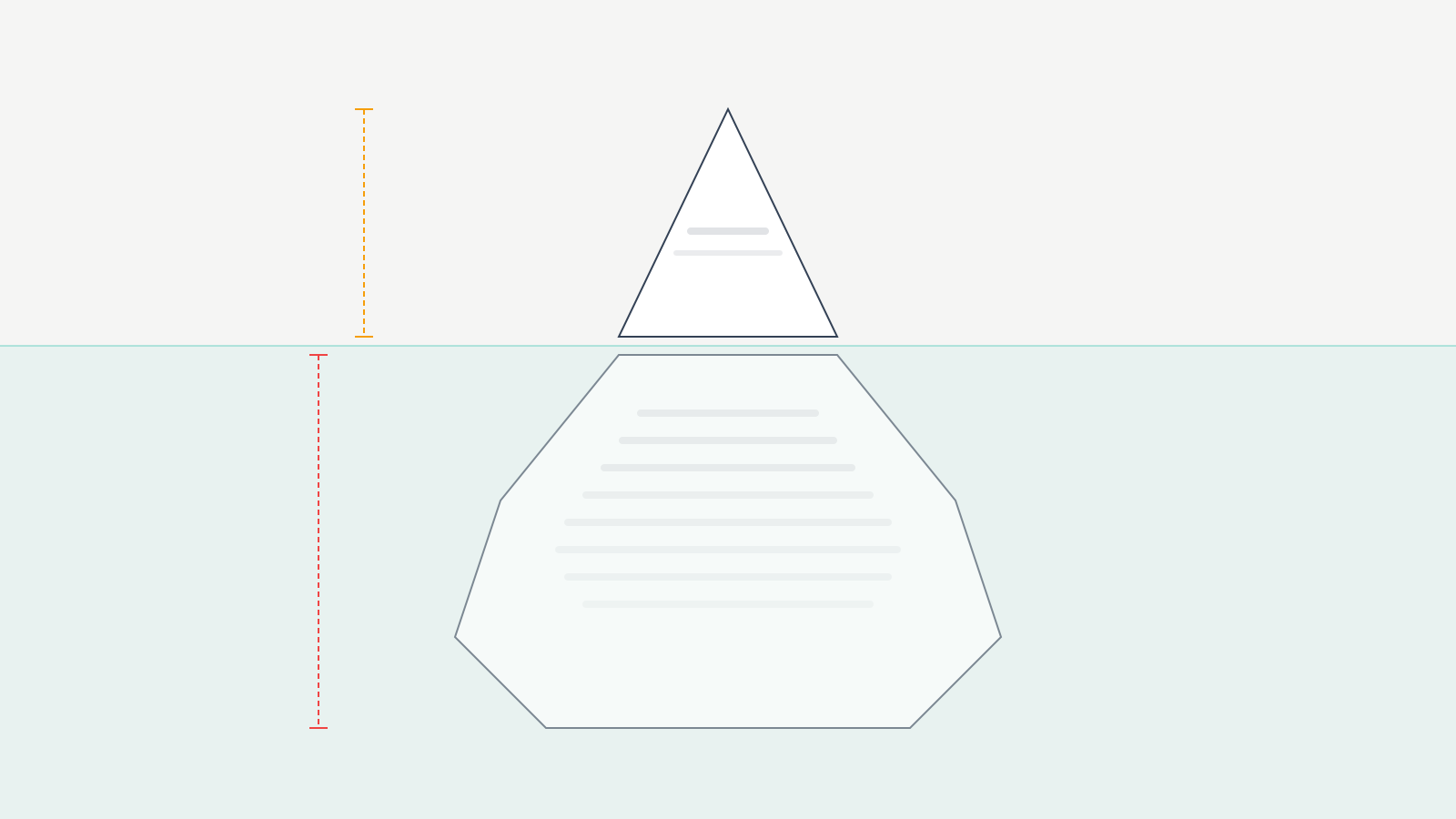
Let’s get specific. Most freelancers and agency owners think scope creep costs them “a few extra hours.” They’re off by a factor of 3-5x.
I audited 47 projects from 2018-2020, before I had real systems. The numbers were brutal.
Average project overrun: 62%. A $5,000 project delivered $8,100 worth of work. A 40-hour estimate ate 65 hours. Every single time, I thought “this one’s just a little over.” It wasn’t.
| Metric | Before Systems (2018-2020) | After Systems (2022-2025) |
|---|---|---|
| Projects audited | 47 | 156 |
| Projects with scope creep | 33 (70%) | 19 (12%) |
| Avg hours overrun | 62% over estimate | 8% over estimate |
| Revenue leaked per project | $3,100 | $340 |
| Annual revenue leaked | $48,000+ | $4,200 |
| Change orders issued | 2 total | 89 total |
| Avg effective hourly rate | $54/hr | $142/hr |
Look, the “after” numbers aren’t perfect. 12% of projects still have some creep. But the financial damage dropped from $48,000/year to $4,200/year. That’s $43,800 in recovered revenue annually from process changes that cost me nothing to implement.
What Scope Creep Is (and What It Isn’t)
Scope creep is the gradual expansion of project requirements beyond the original agreement, without matching adjustments to budget, timeline, or resources.
Three elements. All required.
Gradual. It doesn’t announce itself. Nobody emails you saying “I’d like twice as much work for the same price.” It’s “could you also just…” repeated 15 times until the project doubles.
Beyond the agreement. This requires having a clear agreement. Without defined scope, everything’s arguably “in scope.” Vague proposals are scope creep’s best friend.
Without adjustments. Adding work is fine. Adding work with budget and timeline adjustments is called a change order. Adding work without adjustments is scope creep. The distinction matters.
What scope creep is NOT:
Legitimate project evolution. Requirements change as projects progress. Discovery reveals new info. Business needs shift. Adapting is professional, not creep.
Clarification of vague terms. If you wrote “website design” and the client assumed that included SEO… that’s your communication failure. It should trigger clarification, not a change order.
Your own underestimation. Quoted 20 hours, needed 40 because you misjudged complexity? That’s your estimating problem. Not the client’s fault.
The 5 Root Causes (Ranked by Frequency)
I categorized every scope creep instance across those 200+ projects. The causes aren’t evenly distributed.
| Root Cause | % of Instances | Avg Cost Per Instance | Preventable? |
|---|---|---|---|
| Vague initial scope | 41% | $4,200 | 100% preventable |
| Fear of saying no | 23% | $2,800 | 100% preventable |
| No change management process | 18% | $3,100 | 100% preventable |
| Client inexperience | 12% | $1,900 | Mostly preventable |
| Relationship over business | 6% | $5,600 | 100% preventable |
82% of all scope creep comes from just 2 causes: vague scope and fear. Both are entirely within your control.
Vague Initial Scope (41%)
The biggest one by far. Proposals that say “website development” without specifying page count, features, revision rounds, or exclusions. Clients interpret generously. You interpret narrowly. Conflict follows.
Every vague term is a creep entry point. “Branding” means different things to 10 different people. “Support” is unbounded. “Optimization” is whatever the client imagines it to be.
Fear of Saying No (23%)
This one’s personal. I spent my first 3 years of freelancing terrified that any pushback would lose clients. So I said yes to everything. Each individual “yes” felt small. The accumulation was devastating.
Honestly, the fear comes from scarcity mindset. You’re afraid the client will leave if you set boundaries. In reality… clients respect providers who manage scope professionally. They trust you more, not less.
No Change Management Process (18%)
Even with good scope definitions, projects evolve. Without a process for handling changes, every request becomes ad hoc. Some get absorbed silently. Others get awkward pushback. The inconsistency frustrates everyone.
Client Inexperience (12%)
Many clients have never hired a developer before. They don’t know where reasonable ends and overreach begins. They’re not malicious. They’re uninformed. Educating clients about process is part of the job. You can’t expect them to know industry norms they’ve never encountered.
Relationship Over Business (6%)
Only 6% of instances, but the most expensive per occurrence at $5,600 average. These are the projects where you want the client to like you so badly that you sacrifice profitability entirely. The paradox: those clients often end up dissatisfied anyway because you’re overextended and delivering mediocre work.
Prevention: The 7-Point System That Cut Creep by 83%
Prevention is cheaper than cure. Every time. Here’s the exact system I use for every project.
1. Detailed Proposals With Exclusions
Your proposal needs 4 sections, non-negotiable:
Inclusions. Specific. “5-page website” not “website.” “2 rounds of revisions” not “revisions.” “Logo design in 3 concepts” not “branding.”
Exclusions. This matters as much as inclusions. “Does not include copywriting, stock photography, SEO setup, or ongoing maintenance.” Clients can’t claim something was implied if you explicitly excluded it.
Assumptions. “Assumes client provides all content within 2 weeks of project start.” “Assumes maximum of 50 products in initial catalog.” When assumptions prove wrong, you have grounds for adjustment.
Acceptance criteria. What will you hand over? How does the client confirm it’s complete? This prevents indefinite revision cycles that never actually end.
2. Change Order Process in the Contract
This exact clause goes in every contract I send:
“Additional requests beyond this scope will be handled as change orders. A quote for additional work will be provided before proceeding. Change orders may affect project timeline.”
This normalizes change orders from day 1. Clients understand that “more” means “more money and time.” They can still request changes. They just can’t expect them for free.
3. Revision Limits With Pricing
Unlimited revisions is unlimited scope. Full stop. Instead:
“This project includes 2 rounds of revisions based on consolidated feedback. Additional revisions billed at $150 per round.”
Define what counts as a revision round. Clarify that feedback should be consolidated… 1 round of organized changes, not 15 emails with individual tweaks over 3 weeks.
4. Written Scope Sign-Off
Before work begins, get explicit written agreement. Signed contract. Proposal acceptance email. Project brief sign-off. Something that says “we agree this is what the project includes.” When scope questions come up later… reference it.
5. Project Management With Visible Scope
Tools like ClickUp or Monday let you document scope in shared project spaces. Clients see exactly what tasks are included. Adding tasks is visible and explicit rather than buried in email threads nobody can find 3 weeks later.
6. Kickoff Call With Process Education
Every project starts with a 30-minute kickoff where I walk clients through the process. How we handle change requests. What’s in scope. What happens if they want additions. Takes 30 minutes upfront, saves 10+ hours of awkward conversations later.
7. Buffer Pricing
I build a 15-20% buffer into every quote. Not dishonest… realistic. Projects almost never match estimates exactly. This buffer absorbs genuinely minor stuff without requiring a change order for every 15-minute question. If a project runs clean, the buffer is profit. If it doesn’t, you’re still protected.
Identification: The 4 Warning Signs
Despite prevention, creep happens. Catching it early limits damage. Here’s what to watch for.
Red Flag Phrases
Train yourself to recognize these. They’re the verbal signature of incoming creep:
- “Could you just…”
- “While you’re in there…”
- “I thought this was included…”
- “One more small thing…”
- “This shouldn’t take long…”
Each one minimizes the request. Makes it feel unreasonable to refuse. The request might be minor. It might also be the 10th “minor” request that collectively adds 20 hours.
The Accumulation Test
Individual requests seem small. In isolation, saying no feels petty. But scope creep is about accumulation.
Ask yourself every week: if I listed all the additional requests on this project, would the total justify a change order? If yes, you’ve got scope creep regardless of how trivial each individual ask felt.
Hours Tracking (Even on Fixed-Fee)
For fixed-fee projects, track hours even if you don’t bill hourly. If you quoted based on 30 hours and you’re at 45 with more to go… something expanded. Either your estimate was wrong or scope creeped. This data tells you where creep happened. Can’t recover the hours on this project, but it prevents the same hit next time.
Client Pattern Recognition
Some clients creep consistently. Not malicious. It’s just how they work. They refine by iteration. They discover needs mid-project. They think in “wouldn’t it be nice if” terms. Identify these clients early. They need stricter scope management than clients who stick to briefs.
The Response Script That Saves Relationships
You’ve identified creep. Now what? The wrong response damages the relationship. The right one strengthens it.
I’ve used this 4-step script for 89 change order conversations since 2022. Zero clients lost. $67,000+ in additional revenue captured.
Step 1: Validate immediately. “That’s a great idea and would genuinely improve the project.” Don’t skip this. It prevents defensiveness.
Step 2: Reference the agreement. “This wasn’t part of our original scope, which covers X, Y, and Z. This would be an addition.” Use “we agreed” language. It’s not you imposing limits. It’s both parties honoring a mutual commitment.
Step 3: Offer options. Don’t just say no. Give paths forward:
- Change order. “I can do this as an additional phase. Let me put together a quote.”
- Swap. “We could replace [planned feature] with this if timeline and budget need to stay the same.”
- Phase 2. “Let’s save this for after we complete the current project.”
- Self-service. “This is something you could add yourself after launch” or “There’s a plugin that handles this without custom dev.”
Step 4: Document the decision. Whatever gets decided, put it in writing. Change order approved? Written confirmation. Client declines the addition? Note it. You agree to include something as goodwill? Make clear it’s an exception. Documentation kills “but you did that last time” arguments.
Here’s the actual email template I send:
“Hi [Name], great idea on the [feature]. I think it would genuinely improve the project. This wasn’t included in our original scope, which covers [brief summary]. Adding this would require approximately [X hours/$X] and might extend the timeline by [Y]. Happy to proceed as a change order. Alternatively, we could swap it for [lower-priority item] if you’d prefer to keep budget and timeline unchanged. Let me know how you’d like to proceed, and I’ll update our project plan.”
Collaborative. Not confrontational. Works every time.
Pricing Models vs. Scope Creep Vulnerability
Your pricing model determines how exposed you are. I’ve used all of these.
| Pricing Model | Creep Risk | Why | Best For |
|---|---|---|---|
| Fixed fee, vague scope | Extreme | Unlimited liability on undefined work | Nothing. Avoid this. |
| Fixed fee, tight scope | Low | Clear boundaries with change order process | Defined projects with clear deliverables |
| Hourly | Very low | Every hour billed. Clients self-limit. | Discovery, maintenance, unclear scope |
| Retainer (monthly) | Low-medium | Scope bounded by hours, but “one more thing” creeps in | Ongoing relationships |
| Value-based | Low | Scope tied to outcomes, not tasks | High-impact projects with measurable ROI |
| Phase-based | Very low | Scope resets between phases. Natural checkpoints. | Complex, evolving projects |
The sweet spot for most agency work? Fixed fee with tight scope + change order process, or phase-based for bigger builds. I use phase-based for anything over $15,000. The scope reset between phases has saved me more money than any contract clause.
Systemic Fixes That Compound Over Time
If you’re experiencing scope creep frequently, the problem isn’t individual projects. It’s your system. Fix the system.
Post-Project Reviews
After every project, assess: Did scope creep occur? Where were the entry points? What in my proposal allowed it? What would I change? I spend 15 minutes on this after every project. The pattern recognition it builds is worth thousands.
Living Proposal Template
Every scope lesson updates my proposal template. Learned a new exclusion I need? Added. Found an assumption I always forget to state? Built in. Discovered a term clients misinterpret? Clarified. My proposal template has been revised 40+ times since 2020. It’s dramatically better than version 1.
Client Education at Kickoff
Many creep issues come from client misunderstanding. Explain your process at project start. Set expectations for how changes are handled. Give examples of what’s in and out of scope. Educated clients create fewer creep situations because they understand boundaries before testing them.
Fire Chronic Creepers
Some clients will always push. Every project becomes a negotiation. Every deliverable “isn’t quite what they meant.” I’ve fired 4 clients specifically for chronic scope creep. Each time, the freed capacity went to better clients who paid more and creep less.
The math was never close. One chronic creeper was paying $3,500/month on retainer but consuming $6,200/month in actual time. Replacing them with a client who respected boundaries recovered $32,400/year in capacity.
My Honest Mistakes
I’ve made every scope creep mistake there is. Here are the worst ones, with actual numbers.
Mistake 1: The “goodwill” trap. In 2020, I threw in $2,200 of free work for a client I wanted to turn into a retainer. They never signed the retainer. They did refer me to 2 other clients who both expected the same free extras. Net loss: roughly $7,000 across all 3 projects.
Mistake 2: Verbal scope agreements. “We discussed this on the call” is worthless when the client remembers a different call. I lost a $12,000 project dispute in 2019 because nothing was in writing. The client wasn’t lying. They genuinely remembered the scope differently. Written agreements aren’t about trust. They’re about human memory being terrible.
Mistake 3: Absorbing creep to “finish faster.” My logic was: just do the extra work, ship the project, move on. In practice, “extra work” always spawned more extra work. Projects I absorbed on took 40% longer on average than projects where I issued change orders. The change order conversation takes 10 minutes. Absorbing the work takes 10 hours.
Mistake 4: Different standards for different clients. Some clients got strict scope management. Others got loose treatment because I liked them. The inconsistency created confusion and made it harder to enforce boundaries when I needed to. Now every client gets the same process. No exceptions.
Build the System, Then Trust It
Scope creep isn’t a client problem. It’s a systems problem. Clients will always want more. That’s human nature. Your job isn’t to change human nature. Your job is to build processes that handle those wants gracefully.
The 7-point prevention system I described above took me 2 weekends to build. Proposal template. Contract clauses. Change order process. Kickoff script. It’s not complicated. It’s just deliberate.
Since implementing it, I’ve recovered roughly $175,000 in revenue that would’ve leaked to uncompensated work. That’s not hypothetical. That’s 89 change orders at an average of $750 each, plus the avoided overruns on projects that stayed in scope because boundaries were clear from the start.
You don’t need to be confrontational. You don’t need to be rigid. You need a system that makes scope conversations normal instead of awkward. Build it this weekend. Your future self will thank you when the next “could you just…” email hits your inbox and you’ve already got the response ready.
Is it okay to do small extras without charging?
u003cpu003eYes, occasionally and intentionally. Small goodwill gestures strengthen relationships. But make it clear: u0022I’m happy to throw this in as a courtesy.u0022 Frames it as generosity, not expectation. I budget roughly u003cstrongu003e2-3 hoursu003c/strongu003e of goodwill per project. Anything beyond that triggers a change order. The problem isn’t occasional extras. It’s when extras accumulate into u003cstrongu003e15-20 hoursu003c/strongu003e of unpaid work because nobody drew the line.u003c/pu003e
How do I bring up scope creep with a client who doesn’t realize they’re doing it?
u003cpu003eFrame it as process, not accusation. u0022I want to make sure we’re tracking scope accurately. These recent requests fall outside our original agreement. Let me recap what we agreed to and propose how we handle additions going forward.u0022 In my experience, u003cstrongu003e90%u003c/strongu003e of clients genuinely don’t realize they’re creeping. A non-confrontational u003cstrongu003e10-minuteu003c/strongu003e conversation resolves it almost every time.u003c/pu003e
Should I include a scope buffer in my pricing?
u003cpu003eAbsolutely. I use u003cstrongu003e15-20%u003c/strongu003e. Quoting exactly what you need leaves zero room for the unexpected. A u003cstrongu003e$10,000u003c/strongu003e project with a u003cstrongu003e15%u003c/strongu003e buffer means you’re quoting u003cstrongu003e$11,500u003c/strongu003e. That extra u003cstrongu003e$1,500u003c/strongu003e absorbs the u003cstrongu003e3-4u003c/strongu003e small asks that always happen without requiring awkward conversations over trivial amounts. Projects that run clean? The buffer is pure profit.u003c/pu003e
What if the client insists something was included when it wasn’t?
u003cpu003eReference the written documentation. u0022Our proposal specified X, Y, and Z. I don’t see this item listed. Can you point me to where we discussed including it?u0022 If it’s genuinely ambiguous, acknowledge that and find a fair resolution… maybe splitting the cost. If it’s clearly not included and they’re pushing, hold firm. This is exactly why written scope agreements exist. I’ve had this conversation u003cstrongu003e12 timesu003c/strongu003e. The documentation resolved it within u003cstrongu003e1 emailu003c/strongu003e every single time.u003c/pu003e
How do I handle scope creep mid-project without damaging the relationship?
u003cpu003eProfessionalism maintains relationships better than compliance. Use the u003cstrongu003e4-stepu003c/strongu003e script: validate, reference, offer options, document. u0022I want to deliver the best result, so let’s manage this well. This request is outside our original scope. Here are u003cstrongu003e3u003c/strongu003e options for proceeding.u0022 In my experience, clients actually respect you more after a professional scope conversation. Resentfully absorbing extra work creates worse outcomes than honest u003cstrongu003e10-minuteu003c/strongu003e boundary conversations.u003c/pu003e
Is scope creep always the client’s fault?
u003cpu003eNo. Based on my data, u003cstrongu003e82%u003c/strongu003e of scope creep traces back to the provider: vague proposals, unclear communication, fear of confrontation. Clients ask for more because that’s natural. Your systems should handle those asks. If you didn’t define scope clearly, blaming the client for interpreting differently isn’t fair. I caused most of my own scope creep problems for the first u003cstrongu003e3 yearsu003c/strongu003e. Owning that was the turning point.u003c/pu003e
When should I just absorb scope creep and move on?
u003cpu003eWhen it’s genuinely under u003cstrongu003e30 minutesu003c/strongu003e. When you caused the ambiguity. When the relationship has clear long-term value. When fighting costs more in time and stress than doing it. But track it. If you’re constantly u0022just absorbingu0022 requests, the pattern matters even when individual instances don’t. I keep a running log. If absorbed requests on any single project exceed u003cstrongu003e3 hoursu003c/strongu003e, I trigger a scope conversation regardless.u003c/pu003e
How detailed should my proposal scope section be?
u003cpu003eDetailed enough that a neutral third party could determine whether a request is in scope. List specific deliverables, quantities, revision limits, and explicit exclusions. My proposals average u003cstrongu003e3-4 pagesu003c/strongu003e of scope definition for a u003cstrongu003e$10,000u003c/strongu003e project. Yes, it takes u003cstrongu003e2-3 hoursu003c/strongu003e to write. That time saves u003cstrongu003e20+ hoursu003c/strongu003e of scope disputes. If your scope section is u003cstrongu003e1u003c/strongu003e paragraph, it’s too vague. Guaranteed.u003c/pu003e
Can hourly billing eliminate scope creep?
u003cpu003eMostly. With hourly billing, extra work means extra billing. Clients self-limit when each request costs money. The trade-off: hourly projects lack clear endpoints and can create client anxiety about costs. My preferred hybrid: fixed fee for defined scope, hourly for additions. Gives project clarity while eliminating the incentive for clients to expand scope without paying. About u003cstrongu003e60%u003c/strongu003e of my projects use this model now.u003c/pu003e
What if the scope creep requests would actually improve the project?
u003cpu003eGreat ideas still need proper change management. u0022This would definitely make the project better. Let’s add it as a change order so we can give it proper attention without impacting what we’ve already committed to.u0022 Good ideas deserve proper resourcing, not being squeezed into an existing scope. The quality of the idea doesn’t change the need for process. In fact, better ideas usually need u003cemu003emoreu003c/emu003e time and budget, not less.u003c/pu003e