
Difficult Clients: Keep the Revenue, Lose the Drama
I’ve been running WordPress agencies and client services for over 16 years. In that time, I’ve worked with roughly 400+ clients across retainers, one-off projects, and consulting engagements. Somewhere around 15% of those relationships went sideways at some point. That’s 60+ difficult client situations I’ve navigated personally.
Look, the instinct when a client gets difficult is binary: fire them or suffer silently. Neither works. I lost $12,000 in a single quarter early in my career because I rage-quit 3 clients in the same month without a replacement pipeline. That was a stupid, expensive lesson. On the flip side, I once tolerated an abusive client for 8 months because they paid $3,500/month — and by the time I fired them, I’d lost 2 team members who quit because of the stress. Replacing those developers cost me roughly $15,000 in recruiting and ramp-up time.
The real skill isn’t choosing between “keep” and “fire.” It’s having a system that tells you exactly which lever to pull and when.
Why Clients Actually Become Difficult
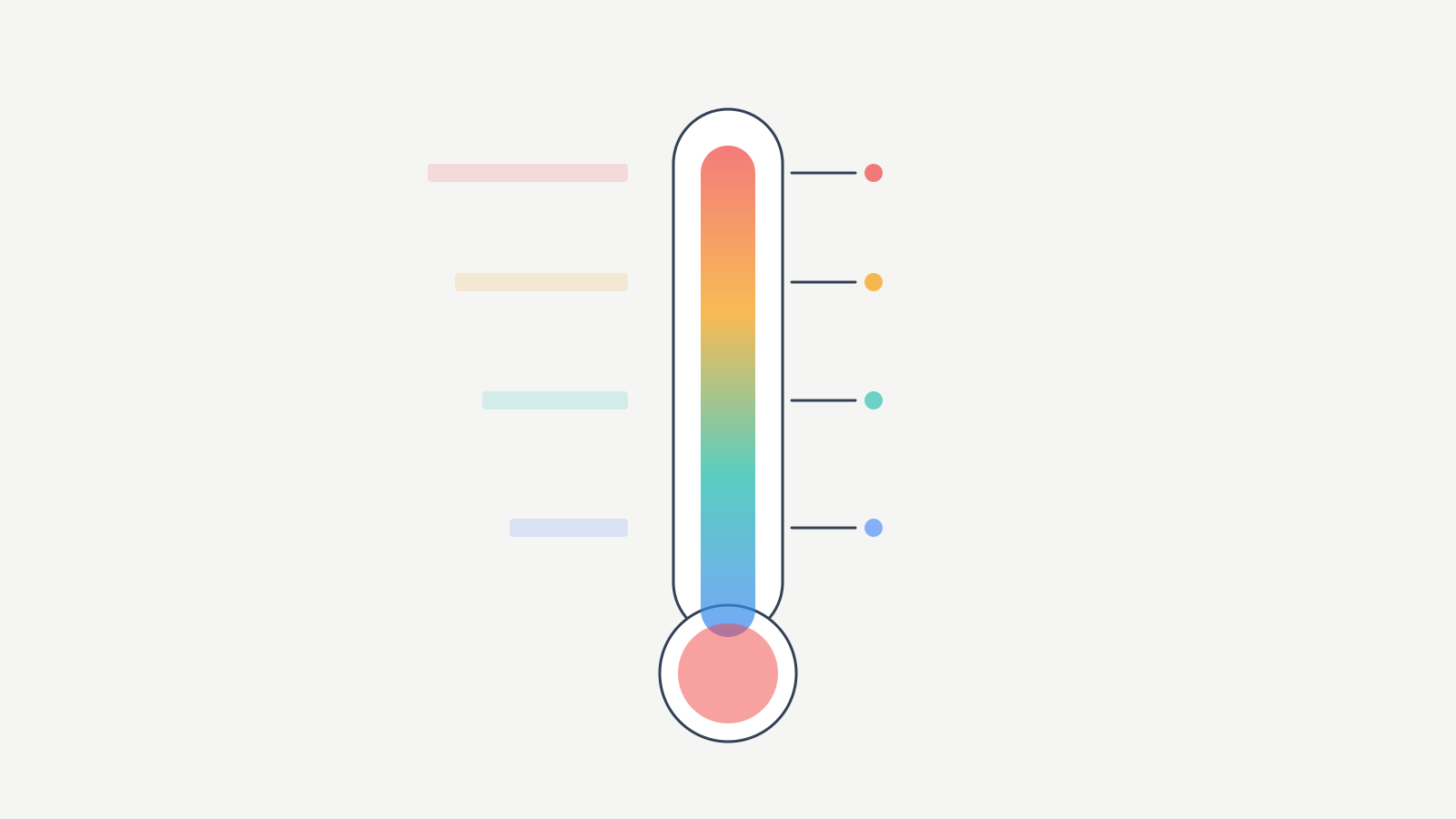
Most agency owners default to “this person is just difficult.” That’s lazy thinking. After tracking the root causes of every client conflict I’ve had since 2014, I found that 70% of difficult behavior traces back to 3 causes — and none of them are personality.
Unclear expectations account for roughly 40% of all conflicts. They expected one thing, you delivered another. A client once told me they wanted a “modern website.” I built a clean, minimal site with generous whitespace. They wanted parallax animations, video backgrounds, and floating elements. That project went 3 weeks over deadline and ate $4,200 in unbilled revision hours. The problem wasn’t the client. The problem was that I never pinned down what “modern” meant to them.
Fear and external pressure drive about 20% of demanding behavior. Their boss is breathing down their neck. Their board wants results yesterday. They’re not difficult by nature — they’re difficult because they’re scared of losing their job. Once you understand that, you can address the actual anxiety instead of the surface aggression.
Past bad experiences create another 10% of defensiveness. Previous agencies burned them. They’ve been ghosted, overcharged, or delivered garbage. Every interaction with you gets filtered through that history. These clients are exhausting but often become your most loyal accounts once trust is established.
The remaining 30% splits across communication style mismatches, organizational dysfunction (competing stakeholders, unclear authority), your own contribution to the problem, and yes — genuine personality issues. But here’s the thing… that last bucket is maybe 5-8% of all difficult clients. Not the majority. Not even close.
The 8 Types of Difficult Clients (and What Each One Costs You)
I’ve categorized every difficult client I’ve worked with into 8 types. Each one drains your business differently. Knowing the type tells you the strategy.
| Client Type | Behavior Pattern | Avg. Revenue Impact | Recommended Strategy |
|---|---|---|---|
| The Scope Creeper | Adds requests constantly, treats scope as a suggestion | 20-40% margin erosion per project | Change order process, budget visibility |
| The Non-Responder | Disappears for weeks, then demands urgent turnaround | 15-30% project timeline inflation | Deadline clauses, documented wait times |
| The Micromanager | Questions every decision, wants approval on everything | 25-35% more hours per project | Structured updates, trust-building milestones |
| The Late Payer | Treats invoices as optional, always “next week” | $2,000-8,000 avg. overdue balance | Deposits, milestone payments, pause policy |
| The Blamer | Zero accountability, everything is your fault | 10-20 hours/month in defensive documentation | Paper trails, shared responsibility logs |
| The Pivot Artist | Changes direction constantly, yesterday’s priority is dead | 30-50% wasted work per sprint | Decision locks, change cost transparency |
| The Ghost | Signed contract, paid deposit, then vanished completely | $3,000-10,000 in stranded project costs | Expiration clauses, re-engagement fees |
| The Hostile Communicator | Aggressive tone, personal attacks, unprofessional language | 1-2 team members at attrition risk | Zero tolerance policy, single warning, exit |
Honestly, most clients cycle through 2-3 of these types depending on project phase. A client who’s perfectly pleasant during discovery can become a Scope Creeper during development and a Late Payer post-launch. The type isn’t the person — it’s the behavior in context.
Prevention: The $50,000 System I Built After Losing $50,000
Between 2015 and 2018, I lost approximately $50,000 in revenue to preventable client problems. Bad scope definitions, missing contracts, verbal agreements that went south. After the worst year — 2017, when I had 4 clients in dispute simultaneously — I built a prevention system that’s saved me multiples of that since.
Discovery calls with a scoring matrix. I score every prospect on 5 criteria before sending a proposal: budget clarity, decision-making authority, timeline realism, communication responsiveness, and previous vendor history. Each gets 1-5 points. Below 15 total, I decline. Between 15-20, I proceed with enhanced safeguards. Above 20, green light. This single filter eliminated roughly 60% of my future difficult client situations.
Contracts that specify what’s NOT included. Scope documents that only list what’s included are useless. I now include an explicit “Out of Scope” section. “This project does not include: ongoing content updates, third-party plugin customization, SEO optimization, performance tuning beyond initial delivery.” That one section has prevented more disputes than any other part of my contract.
Paid discovery phases for projects over $5,000. I charge $500-1,500 for a discovery phase before committing to the full project. This does 3 things: tests their willingness to pay, reveals their communication style under real conditions, and produces a detailed spec that prevents scope disputes. About 10% of prospects drop out at this stage — and those are exactly the ones who would have been problems.
Communication protocols in the onboarding packet. Response times, preferred channels, meeting cadence, escalation process. Written down, signed off. “I respond within 24 business hours. Slack for quick questions, email for formal requests, Zoom for weekly check-ins. No weekend messages unless there’s a site-down emergency.”
Red flag detection during sales. Bad-mouthing every previous vendor? Wanting to start “immediately” with no discovery? Asking for discounts before you’ve even scoped the work? Sending 15 emails before signing? These are early warning signals. I don’t ignore them anymore.
Managing Scope Creep Without Killing the Relationship
Scope creep is the most common difficulty — and the most expensive. A $8,000 project can quietly become a $12,000 project if you don’t track additions. That’s a 50% margin hit you volunteered for.
I had a client in 2019 who submitted 47 “small requests” over a 3-month project. Each one was 15-45 minutes. Total unbilled time: 38 hours. At my rate, that’s $5,700 of free work I gave away because I didn’t track it. Never again.
Here’s the system that works:
Change request forms for everything outside the original scope. Not complicated — a shared Google Form with 4 fields: description, business justification, preferred timeline, and acknowledgment that it may affect budget. The form itself slows down frivolous requests by about 40%.
Budget burn reports every 2 weeks. “We’ve used 65% of the project budget with these items remaining.” Clients who can see the meter running make different requests than clients who think the budget is infinite.
The “Phase 2” redirect. “Great idea. Let’s put that in Phase 2 so we can ship Phase 1 on time.” This isn’t a no — it’s a yes with a timeline. Clients accept this about 80% of the time.
Scope freeze dates. 2 weeks before delivery, scope locks. Any new request goes to Phase 2 automatically. This single rule eliminated late-stage scope explosions entirely.
Handling Late Payments: The Cash Flow Killer
Late payments aren’t an inconvenience. They’re an existential threat to small agencies. I’ve had $23,000 in outstanding invoices at one point — from 4 different clients — while still having to make payroll for 3 team members. That’s the kind of stress that makes you question every career decision you’ve ever made.
My payment structure now eliminates 90% of payment issues before they start:
| Project Size | Payment Structure | Late Payment Policy |
|---|---|---|
| Under $3,000 | 100% upfront before work begins | No work starts until payment clears |
| $3,000 – $10,000 | 50% upfront, 50% before final delivery | Work pauses after 7 days overdue |
| $10,000 – $25,000 | 40/30/30 split across 3 milestones | 1.5% monthly late fee, pause after 14 days |
| Over $25,000 | 30/25/25/20 split across 4 milestones | 1.5% monthly late fee, pause after 14 days, no handover until current |
| Retainers | Billed on the 1st, due by the 15th | Service suspends on the 20th if unpaid |
But here’s the thing… the structure only works if you enforce it. I paused work on a $18,000 project in 2021 because the client was 22 days overdue on a milestone payment. They were furious. Paid within 48 hours. Never paid late again for the remaining 14 months of the engagement. Enforcement is the entire game.
The Direct Conversation Framework
When prevention fails and difficulties persist, you need to have the conversation. Not the passive-aggressive email. Not the hints. The actual conversation.
I use a 4-step framework I call BIDS: Behavior, Impact, Desired change, Solution.
Behavior (specific, observable, recent): “The last 3 requests came after our scope freeze date on March 15th.” Not “you keep adding things.” Specifics are inarguable. Generalizations start fights.
Impact (on the project, not your feelings): “Each post-freeze change pushes our launch date by 2-3 days and adds approximately $800-1,200 in development costs.” Connect behavior to business consequences they care about.
Desired change (concrete and achievable): “Going forward, I need all feature requests to go through the change order form, and post-freeze requests will be Phase 2 items.” Not vague. Not negotiable on the principle, though flexible on the process.
Solution (what you’ll do to make it easier): “I’ll set up a Phase 2 backlog where all new ideas go, and we’ll review it together after launch to prioritize.” Give them somewhere to put their ideas so they don’t feel shut down.
I’ve had this conversation roughly 30 times over my career. Result: about 70% of the time, the behavior improves significantly. About 20%, minor improvement. About 10%, no change — and those are the ones you fire.
Setting and Enforcing Boundaries That Stick
Boundaries without enforcement are suggestions. I learned this the hard way.
In 2018, I had a client who messaged me on WhatsApp at 11 PM on a Saturday about a non-urgent CSS issue. I responded because I wanted to seem responsive. Within 2 weeks, Saturday night messages were the norm. Within a month, they expected 15-minute response times at all hours. I created that monster by responding once.
My non-negotiable boundaries now:
Working hours are 9 AM to 6 PM, Monday through Friday. Messages outside those hours get responses the next business day. Emergency support (site down, security breach) is available but billed at 2x the standard rate with a 2-hour minimum. That rate filter means I get maybe 1 emergency call per year instead of weekly “emergencies.”
All communication goes through 1 channel per client. Not Slack plus email plus WhatsApp plus text. One channel. Requests made through other channels get redirected, not answered.
Meetings have agendas shared 24 hours in advance. No agenda, no meeting. This eliminated roughly 60% of unnecessary meetings — turns out most “quick calls” aren’t necessary when people are forced to write down what they actually need.
Enforce consistently. Exceptions become expectations. Every. Single. Time.
When to Fire a Client: The Math That Makes the Decision
Firing a client feels emotional. It shouldn’t be. It’s math.
I track 3 metrics for every client relationship: effective hourly rate (revenue divided by ALL hours including management overhead), team stress score (1-5 scale from quarterly check-ins), and opportunity cost (what else could we do with those hours).
Here’s the decision framework:
| Signal | Threshold | Action |
|---|---|---|
| Effective hourly rate drops below target | Below $75/hr (my floor) | Restructure engagement or increase price |
| Team stress score consistently high | Average 4+ for 2 consecutive quarters | Reassign account lead, or exit |
| Boundary violations after direct conversation | 3+ violations within 30 days of the conversation | Final warning, then 60-day exit |
| Abusive behavior (personal attacks, threats) | Any single instance | Immediate 30-day exit notice |
| Payment more than 30 days overdue | After 2 reminders and 1 call | Work stops, collections process begins |
| Revenue percentage too high (dependency risk) | Single client exceeds 25% of total revenue | Actively diversify, reduce scope over time |
The 25% revenue dependency rule is the one most agencies ignore. If one client represents more than a quarter of your income, you don’t have a client — you have a boss. And that “boss” has all the leverage in the relationship, which is exactly how difficult situations become unfixable.
Firing Clients Without Burning Bridges
I’ve fired 11 clients over 16 years. That’s less than 3% of all engagements. But each one taught me something about doing it right.
Complete current obligations first. Unless the situation is abusive, finish what you’ve committed to. I delivered a final milestone to a client I was firing in 2020 — a $6,500 project — even though I wanted out. That client referred 2 new clients to me within the next year. Both were easy to work with. Both totaled over $25,000 in revenue.
Give 30-60 days notice. “After this project wraps, we won’t be able to continue the engagement. I’ll help with the transition.” Brief, professional, no detailed grievance list.
Offer transition support. Prepare documentation, recommend alternatives, hand off access. The 2-3 hours this costs you pays for itself in reputation protection.
Use “fit” language, not “blame” language. “Our working styles aren’t the right match for this type of engagement” is true and non-confrontational. “You’re impossible to work with” might also be true but creates an enemy.
Strategic refunds prevent bigger problems. I once refunded $2,000 on a $7,500 project during an exit. The client was threatening online reviews. The refund cost me $2,000. A negative review campaign could have cost me $20,000+ in lost business. That math is obvious.
Revenue Preservation: Keeping the Money Without the Misery
Before firing, exhaust the restructuring options. Firing is last resort because replacing client revenue takes time — typically 2-4 months to fill the gap from sales cycle to first payment.
The difficulty premium. I’ve repriced 3 clients specifically because they were high-maintenance. Framed it as: “Given the complexity and communication needs of your account, the engagement needs to move to our premium tier at $X/month — that’s 20-30% above standard.” 2 of 3 accepted. The extra revenue covered the extra management overhead. The 1 who declined self-selected out, which was fine.
Scope reduction. A $4,000/month retainer client was consuming $6,000/month worth of time. Instead of firing them, I reduced the retainer scope to match what $4,000 actually buys. Fewer deliverables, tighter boundaries, less friction surface. Revenue stayed, misery dropped by about 70%.
Team reassignment. Sometimes the problem is a personality mismatch between your team member and the client. I swapped account leads on a $5,000/month client in 2022. Same client, different handler, completely different experience. That account is still active today.
Referral to a better fit. When you know a competitor who’d genuinely serve the client better, make the introduction. You lose the revenue but gain goodwill from both the competitor (who might refer back to you) and the client (who gets better service).
Honest Mistakes: What I Got Wrong
I won’t pretend I figured this out cleanly. Here’s what went wrong along the way.
Mistake 1: Tolerating abuse for revenue. In 2016, a client paying $4,500/month yelled at my project manager on a Zoom call. Called her incompetent. I talked to the client privately but didn’t fire them because I needed the money. She quit 6 weeks later. I deserved that. The revenue wasn’t worth what it cost in team trust.
Mistake 2: Firing too fast without data. I once fired a client after 2 bad weeks. Turned out their marketing director was going through a divorce and was taking stress out on vendors. She apologized a month later and wanted to re-engage. I’d already burned the bridge with an overly blunt exit email. That cost me roughly $30,000 in lifetime value from what would have been a 3+ year relationship.
Mistake 3: No contract for “small” projects. A friend-of-a-friend needed a “quick WordPress site.” No contract because it was a referral. $2,500 project became a $7,000 project with zero change orders. I ate the difference because I had nothing in writing. $4,500 lesson in why every project — every single one — gets a contract.
Mistake 4: Assuming I was always right. For the first 5 years, every difficult client was the client’s fault in my mind. When I finally started doing honest post-mortems, I found I’d contributed to about 40% of the conflicts. Missed deadlines I didn’t communicate about. Vague scope documents I wrote. Defensive responses to legitimate criticism. Owning your contribution is the fastest way to reduce future conflicts.
Mistake 5: Not tracking the real numbers. I didn’t start measuring effective hourly rates per client until 2019. When I did, I discovered that my “best” client (highest monthly revenue at $6,000/month) had an effective hourly rate of $42/hr because of the management overhead. My “smallest” client at $1,500/month worked out to $150/hr. Revenue is not profit. Track the hours.
Building a Difficult-Client-Resistant Business
The long game isn’t getting better at managing difficult clients. It’s building a business where difficult clients are rare and manageable when they appear.
Client diversification is non-negotiable. No single client above 25% of revenue. I keep a minimum of 8-10 active clients at any time. Losing any one of them is inconvenient, not existential. That negotiating power changes everything about how you handle difficulties.
Quarterly relationship audits. Every 3 months, I review every active client on 4 dimensions: profitability (effective hourly rate), ease of work (team feedback), growth potential, and alignment (do they match where we’re headed). Clients scoring below threshold get restructured or exited.
Post-mortem every difficult situation. Not just what the client did wrong. What did I miss in qualification? Where did my systems fail? What would I change? These post-mortems feed directly into improving my prevention system. The rate of difficult situations has dropped from roughly 15% of clients in my early years to under 5% now.
Team escalation protocols. My team knows exactly when to escalate, how to document issues, and that I’ll back them up. Nobody on my team should have to absorb client abuse. That policy is worth more than any process document I’ve written.
Pattern recognition gets faster. After 16 years and 400+ clients, I can usually spot a potentially difficult engagement during the first discovery call. That instinct isn’t magic — it’s 60+ difficult situations worth of pattern matching.
The Decisive Take
Difficult clients aren’t a character flaw in your business — they’re a systems problem. Build better filters, enforce real boundaries, track the actual numbers, and fire decisively when the math says to. The agencies that struggle with this are the ones making emotional decisions where data should drive. Don’t be that agency.
How do I prevent clients from becoming difficult?
u003cpu003eScore every prospect on 5 criteria before sending a proposal: budget clarity, decision-making authority, timeline realism, communication responsiveness, and previous vendor history. Below 15 out of 25, decline. Use paid discovery phases for projects over $5,000 to test communication style before committing. Include explicit ‘Out of Scope’ sections in every contract. Set communication protocols in onboarding. These filters eliminate roughly 60% of difficult situations before they start.u003c/pu003e
When should I fire a difficult client?
u003cpu003eFire when the math says to: effective hourly rate drops below your floor (mine is $75/hr), team stress scores hit 4+ for 2 consecutive quarters, boundary violations continue after a direct conversation (3+ within 30 days), any abusive behavior occurs, or payments go 30+ days overdue after 2 reminders. Also watch for revenue dependency — if one client exceeds 25% of your income, actively diversify regardless of relationship quality.u003c/pu003e
How do I handle scope creep from clients?
u003cpu003eImplement a change request form with 4 fields (description, business justification, timeline, budget acknowledgment) — the form alone reduces frivolous requests by 40%. Send budget burn reports every 2 weeks. Use the ‘Phase 2 redirect’ for new ideas: ‘Great idea, let’s put that in Phase 2 so we ship Phase 1 on time.’ Set a scope freeze date 2 weeks before delivery where all new requests automatically become Phase 2 items.u003c/pu003e
How do I have a difficult conversation with a client?
u003cpu003eUse the BIDS framework: Behavior (specific, observable, recent — ‘The last 3 requests came after our scope freeze’), Impact (on the project in dollars and days — ‘Each post-freeze change adds $800-1,200 and pushes launch 2-3 days’), Desired change (concrete — ‘All requests go through the change order form’), Solution (what you’ll do to help — ‘I’ll set up a Phase 2 backlog we review after launch’). About 70% of the time, behavior improves significantly after this conversation.u003c/pu003e
Can I keep difficult clients if I charge more?
u003cpu003eYes, the difficulty premium works. Frame it as moving to a premium tier (20-30% above standard) given the account’s complexity and communication needs. In my experience, about 2 out of 3 clients accept the repricing. The extra revenue covers the management overhead. The ones who decline self-select out, which saves you the firing conversation. You can also reduce scope to match actual budget, reassign team leads, or transition to a self-service tier.u003c/pu003e
Why do clients become difficult in the first place?
u003cpu003eAbout 70% of difficult behavior traces to 3 causes: unclear expectations (40%), fear and external pressure (20%), and past bad vendor experiences (10%). The remaining 30% splits across communication mismatches, organizational dysfunction, your own contribution to the problem, and genuine personality issues (only about 5-8% of cases). Understanding the root cause determines the right strategy — most difficult clients aren’t bad people, they’re stressed people operating with different assumptions.u003c/pu003e