
Building a Business Without Social Media: 10 Alternative Channels
The prevailing narrative says you must be on social media to build a business. Post daily. Build a following. Dance on TikTok. Share your breakfast. It’s presented as non-negotiable, the only path to visibility, credibility, and customers.
But plenty of successful businesses thrive without social media, or with minimal presence. Before social platforms existed, businesses found customers through other means. Those means still work. For entrepreneurs who find social media exhausting, manipulative, or simply not aligned with how they want to spend their time, there are alternatives.
I’ve built a business that serves 800+ clients, including brands like IBM, Adobe, and HubSpot. My primary channels? SEO, email, and referrals. Social media has always been a minor player in my business, not the main event. This guide covers how to build a business without relying on social media marketing.
Why Consider Social Media Alternatives
The case against social media dependency is stronger than most marketers admit.
Platform vulnerability. Algorithm changes can devastate reach overnight. You don’t own your audience. Facebook organic reach dropped from 16% to under 2% over a few years. Instagram keeps changing what gets shown. X’s algorithm shifts with ownership changes. Your business strategy shouldn’t depend on decisions made in Silicon Valley boardrooms. I watched a friend lose 80% of her organic reach after a single algorithm update. Her business took six months to recover.
Time consumption. Social media can absorb enormous time with unclear return. Creating content, engaging with posts, responding to comments, staying current on trends. For many business owners, that time produces better returns invested elsewhere. I’ve tracked my time and found that hours spent on social media rarely converted to actual business. The same hours invested in writing a blog post generated leads for years.
Mental health impact. Many people find social media anxiety-inducing or depressing. The comparison trap, the outrage cycles, the dopamine manipulation. If social media makes you miserable, that affects your work quality and life satisfaction. Building a business that requires constant engagement with platforms you hate isn’t sustainable.
Authenticity pressure. The performance aspect of social media doesn’t suit everyone. Some people don’t want to share personal stories, show their face constantly, or maintain a public persona. That’s legitimate. Not everyone is built for public performance, and business success doesn’t require it.
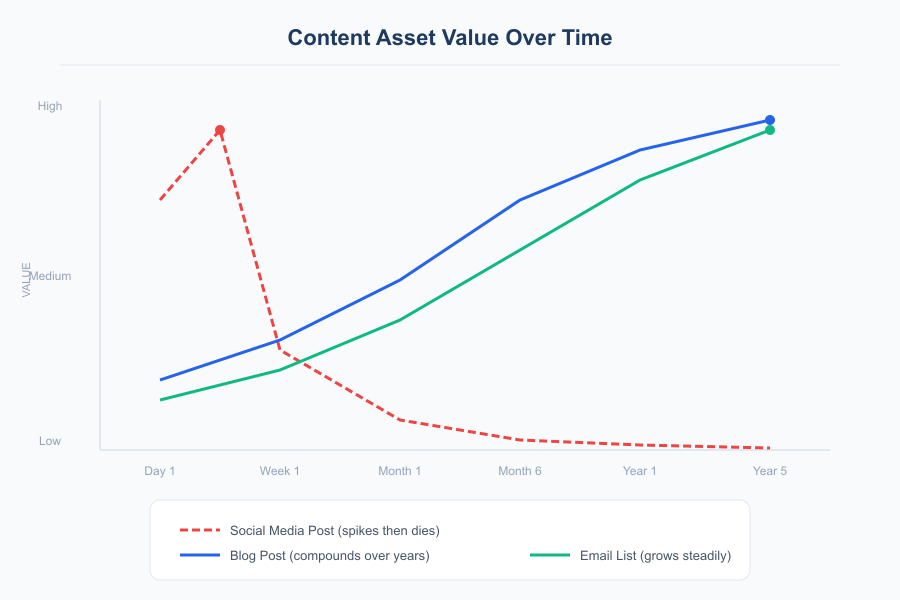
Content treadmill. The constant need for new content is exhausting. Algorithms favor recency. Yesterday’s viral post means nothing today. You’re only as good as your last piece of content. This never-ending production requirement burns out even the most prolific creators. Compare that to a blog post that generates traffic for a decade.
Distraction potential. What starts as marketing becomes endless scrolling. The platforms are designed for addiction. Every time you open the app to post, you risk losing an hour to consumption. The line between work and procrastination blurs dangerously.
Skill mismatch. Some people simply aren’t suited to social media communication. They’re brilliant at their craft but awkward on camera. Excellent writers but poor at short-form quips. Deep thinkers who don’t fit the hot-take culture. That’s fine. Play to your strengths.
Business mismatch. Some businesses and audiences don’t align with social platforms. Enterprise B2B rarely closes deals through Instagram. Local plumbers don’t need TikTok followers. High-end consulting happens in boardrooms, not comment sections.
These are legitimate reasons to explore alternatives. Social media isn’t mandatory for business success.
Understanding Your Alternatives
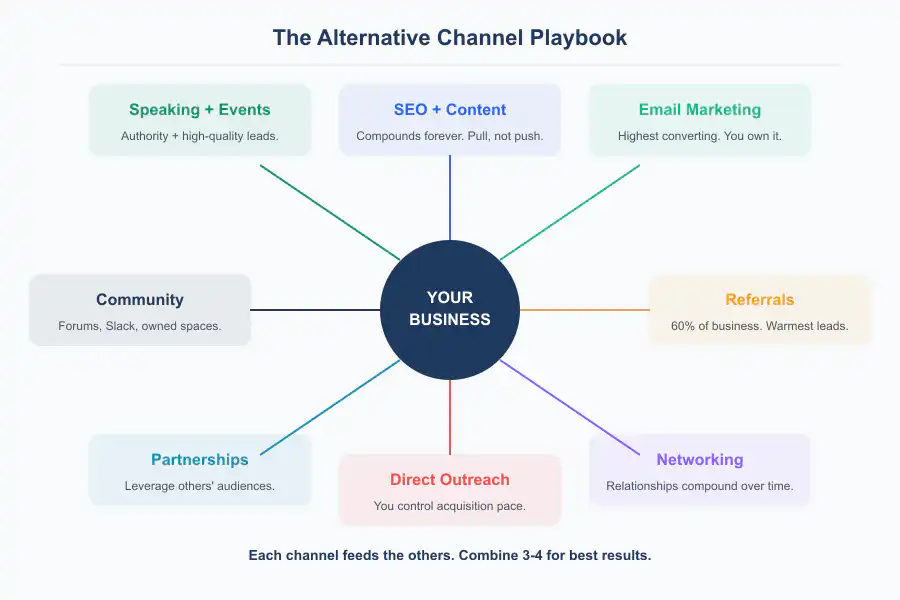
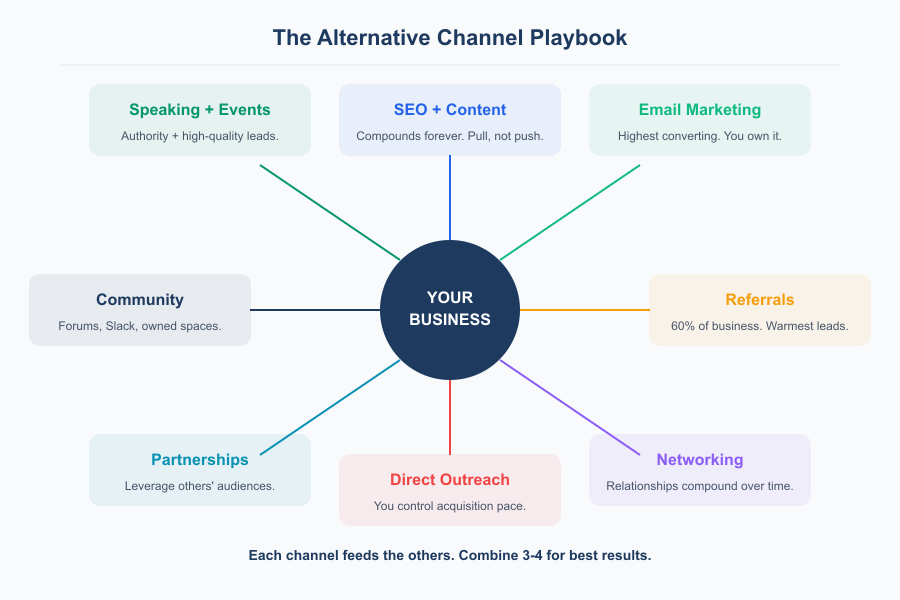
Multiple channels can replace or reduce social media dependence. Most successful businesses use several in combination.
Search engine optimization. Being found when people search represents the most valuable traffic. Google, YouTube, other search engines deliver people actively looking for what you offer. Unlike social media’s push model, SEO is pull. People come to you with existing intent. This is the foundation of my entire business.
Email marketing. Direct communication with people who’ve opted in remains the highest-converting digital channel. You own your list. No algorithm determines whether subscribers see your messages. Email predates social media and consistently outperforms it for business results.
Word of mouth and referrals. Satisfied clients telling others remains the most trusted form of marketing. No amount of clever social content beats a friend saying “you should work with this person.” Referral business often converts faster and retains longer than any other source. About 60% of my clients come through referrals. That percentage has been consistent for years.
Direct outreach. Proactive connection with potential clients puts you in control of client acquisition. Rather than hoping the right people see your posts, you identify ideal prospects and reach out directly. Higher effort per contact but dramatically higher conversion.
Networking. Relationship building, online and offline, creates business opportunities without public broadcasting. One-to-one connections compound over time. People do business with people they know and trust.
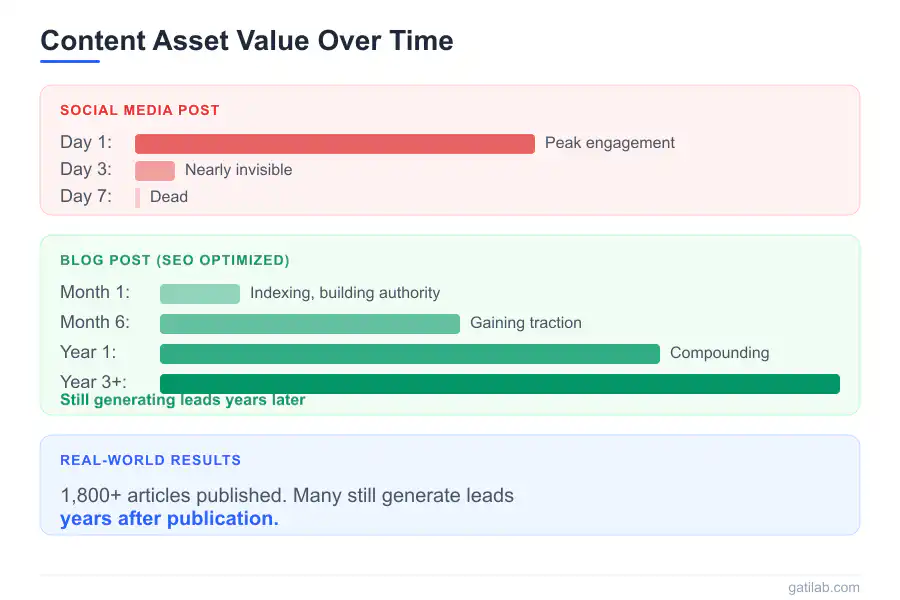
Content marketing. Creating valuable content attracts and educates potential clients. Unlike social content that disappears in feeds, blog posts, videos, and guides persist and accumulate value over time. I’ve published over 1,800 articles. Many of them still generate leads years after publication.
Partnerships and collaborations. Leveraging others’ audiences multiplies your reach without building your own following. Joint ventures, guest content, and referral partnerships extend your visibility through established relationships.
Paid advertising. Paying for attention instead of earning it through organic social provides predictable, scalable client acquisition. Google Ads, YouTube ads, podcast sponsorships, and newsletter placements offer alternatives to the organic social grind.
Community participation. Being active where your audience gathers beyond social platforms. Forums, Slack communities, industry associations, and professional groups offer networking without public performance.
The mix matters more than any single channel. Different businesses find different combinations effective.
The SEO-First Approach
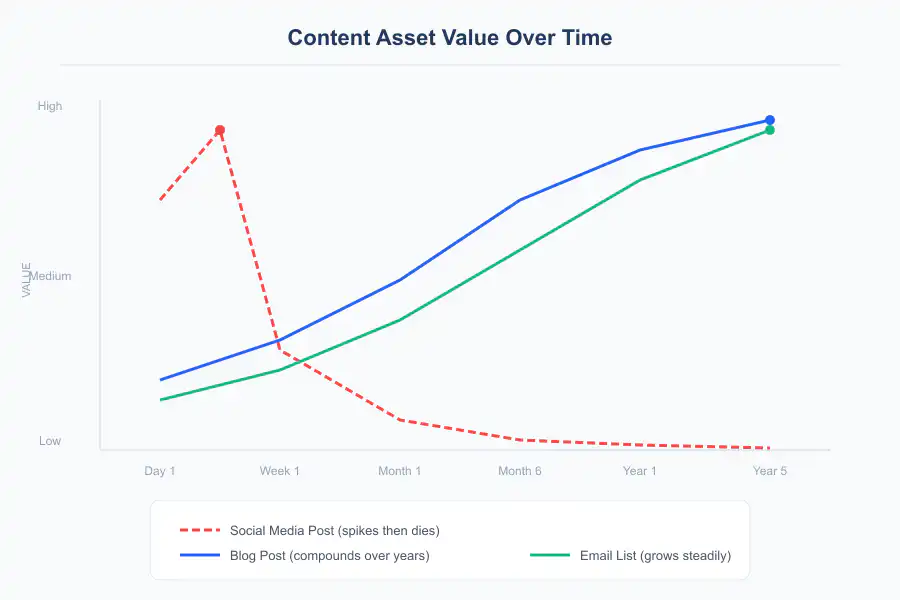
A blog post that generates traffic for a decade beats a social media post that disappears in 24 hours. SEO content compounds. Social content evaporates. Build assets you own.
Building your business on search traffic provides stability that social media can’t match.
Website as foundation. Your site that you own and control serves as home base. No algorithm whims determine whether visitors find you. No platform can shut you down or change the rules. Your website is the one digital asset you truly own. I’ve built my entire presence on gauravtiwari.org. That domain has been working for me since 2009.
Content for search. Articles, guides, and resources optimized for what people search create a compounding asset. Each piece of content is a fishing line in the water, catching relevant searches for years. I’ve written articles that still generate leads a decade after publication. That’s the kind of ROI social media simply can’t deliver.
Topical authority. Deep coverage of your expertise area signals authority to search engines and visitors. Become the comprehensive resource on your specific topic. When you’ve written extensively about a subject, search engines recognize that authority. I’ve published hundreds of WordPress-related articles. Google knows I’m an authority on that topic.
Long-term asset. SEO content keeps working for years. Unlike social posts that disappear within hours, blog posts accumulate search equity over time. The effort invested compounds rather than evaporates.
Intent matching. People searching have specific needs. They’re actively looking for solutions. This represents higher quality traffic than passive social media scrolling. A search for “hire freelance WordPress developer” signals buying intent that no amount of social impressions matches.
Entity SEO. Building recognition as an authority involves becoming a known entity in your field. Search engines increasingly understand entities (people, companies, concepts) and favor recognized authorities.
Local SEO. For local businesses, Google Business Profile and local search visibility drive foot traffic and calls. The phone rings because you appear when people search, not because you posted on Instagram.
SEO requires patience. Results take months, not days. But it builds sustainable traffic independent of social platforms. The business that ranks first for “best accounting software for freelancers” doesn’t need a TikTok presence.
Building Your SEO Foundation
Start with keyword research to understand what your potential clients actually search. Tools like Ahrefs, SEMrush, or even Google’s free Keyword Planner reveal search volume and competition. Target terms with clear commercial intent where you can realistically compete.
Create cornerstone content. Comprehensive guides covering your core topics thoroughly. These long-form pieces establish authority and attract backlinks naturally. Support them with focused articles addressing specific questions and long-tail keywords.
Technical SEO matters but doesn’t require expertise. Ensure your site loads fast, works on mobile, and has clear structure. Most modern website builders handle the basics. Focus your energy on content quality rather than technical optimization.
Build backlinks through genuine value creation. Guest posting on relevant sites, creating resources others want to reference, and building relationships with industry publications all earn links naturally. Avoid link schemes. They don’t work long-term and risk penalties.
Email as Primary Channel
Email marketing deserves more attention than most businesses give it.
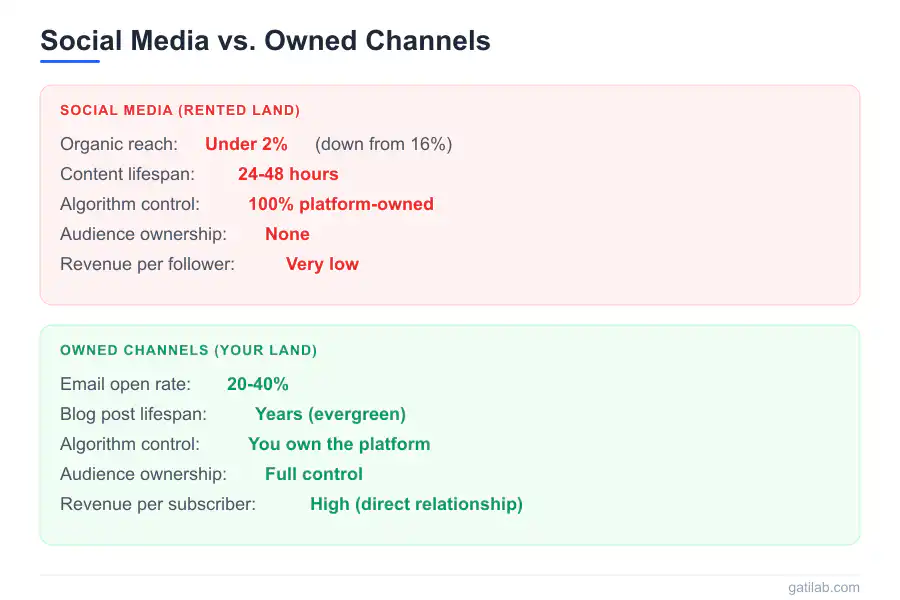
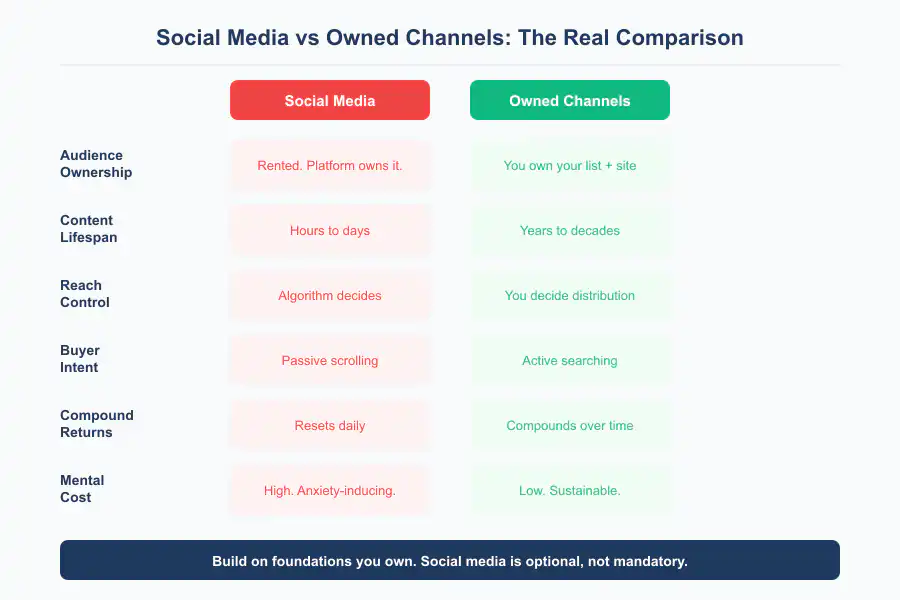
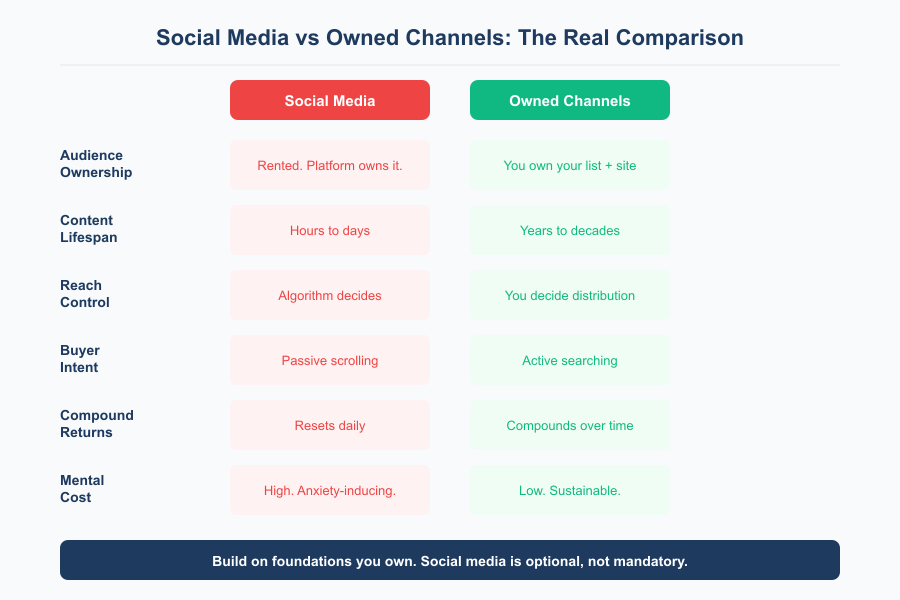
List ownership. You own your email list. No platform can take it away. Social platforms can ban you, algorithm you into oblivion, or simply shut down. Your email list survives all of that. This ownership represents genuine business security. I learned this the hard way when an algorithm change cut my social reach overnight. My email list didn’t flinch.
Opt-in audience. People who actively want to hear from you signed up for a reason. They chose to receive your messages. Higher engagement follows naturally from this explicit consent. Compare this to social media, where algorithms decide whether followers see your content.
Direct communication. Straight to inbox, no algorithm filtering. Your message either arrives or it doesn’t, and with proper deliverability practices, it arrives. You control the timing, the format, and the frequency.
Relationship building. Regular touchpoints build trust over time. Consistent valuable emails create familiarity and credibility that social posts can’t match. People feel like they know you through sustained email communication.
Value-first approach. Newsletters that provide genuine value, not just promotion, earn attention. Educational content, curated resources, and honest insights make subscribers glad they signed up. Promotion works when wrapped in genuine value.
Conversion path. Email is highly effective for converting interest to action. The buyer’s journey often runs through email… awareness content, then consideration content, then decision content. Email nurtures prospects through that journey effectively.
Email is older than social media and still outperforms it for many businesses. The entrepreneur sending valuable weekly emails often outearns the one posting daily to Instagram.
Building Your Email Engine
Choose an email platform that fits your needs and budget. ConvertKit, Mailchimp, and Beehiiv serve different use cases well. Start simple and upgrade as needed.
Create compelling opt-in incentives. Free guides, templates, or tools give people a reason to subscribe beyond “get my newsletter.” The incentive should deliver immediate value relevant to what you sell.
Establish consistent sending rhythm. Weekly or biweekly works for most businesses. Consistency matters more than frequency. Better to send monthly reliably than weekly sporadically.
Write emails people actually want to read. Personality, usefulness, and brevity win. Most business emails are too long, too boring, and too promotional. Be the refreshing exception.
Word of Mouth Engineering
Referrals don’t just happen. You can design for them.
Exceptional service. Work so good people naturally tell others. This is the foundation. No referral program compensates for mediocre work. Excellence generates word of mouth automatically. Every project I complete is an opportunity to create a referral source. I treat it that way.
Client retention. Happy long-term clients are your best referral sources. They’ve experienced your work repeatedly, trust you deeply, and can recommend you confidently. Retention drives referrals.
Asking for referrals. Explicitly requesting referrals from satisfied clients works better than hoping. After a successful project, ask directly: “Who else do you know who might benefit from this?” Most people don’t refer simply because they don’t think to. Prompting helps. I ask every client. Not awkwardly, just naturally at the end of a successful project. The results have been significant.
Referral systems. Structured programs encouraging referrals formalize the process. Incentives for referrers, easy sharing mechanisms, and systematic follow-up turn occasional referrals into a consistent channel.
Case studies and testimonials. Making client success visible provides social proof that supports referrals. When someone receives a referral, they often research before reaching out. Visible success stories validate the recommendation.
Easy to recommend. Clear articulation of what you do makes referral conversations simple. If your clients can’t easily explain what you do, they can’t easily refer you. Crisp positioning enables word of mouth.
Following up. Staying in touch with past clients keeps you top of mind when opportunities arise. Regular check-ins, helpful resources, or genuine relationship maintenance ensure they remember you when someone asks.
Word of mouth is powerful but requires intentional cultivation. Design your business to generate referrals. Don’t just hope they happen.
Direct Outreach
Proactive client acquisition gives you control.
Targeted approach. Identifying ideal prospects focuses effort effectively. Quality over quantity means researching potential clients and reaching out with relevance. Ten thoughtful outreach messages beat a hundred generic ones. I’ve won some of my biggest clients through a single well-crafted email.
Warm outreach. Finding connection points before reaching out increases response rates dramatically. Mutual connections, shared experiences, or genuine engagement with their work creates context for contact.
Value-first contact. Providing value before asking for anything builds goodwill. Share relevant insights, make helpful introductions, or offer genuinely useful resources. The relationship starts with giving, not asking.
Email outreach. Personalized emails to potential clients remain effective when done well. Short, specific, and relevant messages get read. Templates get ignored. The effort of personalization pays off in response rates.
LinkedIn messaging. For B2B, direct professional connection works well. LinkedIn isn’t quite social media in the same way. It’s more professional networking tool than content platform. Thoughtful LinkedIn outreach generates meetings.
Phone and video. Old school but effective for right contexts. Sometimes picking up the phone cuts through digital noise. Video messages stand out in email inboxes. Use the medium that fits your audience.
Follow-up discipline. Most responses come after multiple touchpoints. Professional persistence matters. Many deals close after the fifth or sixth contact. Give up too soon and you leave money on the table.
CRM systems. Tracking relationships and outreach systematically prevents balls from dropping. Even simple systems like a spreadsheet help. More sophisticated CRMs like HubSpot or Pipedrive scale with your business.
Direct outreach requires effort but gives complete control over client acquisition. You’re not dependent on algorithms or virality.
Content Marketing Without Social
Content works without social amplification when distributed through other channels.
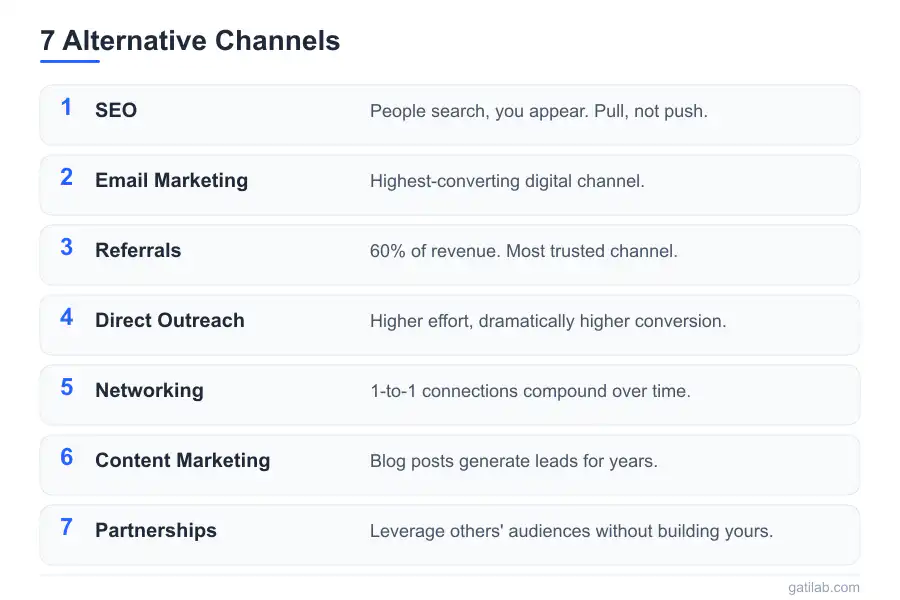
Blog content. In-depth articles on your website attract search traffic and demonstrate expertise. Long-form content performs better in search and creates more reader trust than short social posts. This has been my primary marketing channel for over sixteen years.
YouTube. Video content is searchable and discoverable through YouTube’s search engine. Technically social but functions differently. Content persists and gets found for years. The second largest search engine deserves attention.
Podcasting. Audio content builds loyal audiences. Podcast listeners develop strong parasocial relationships with hosts. Guest appearances on established podcasts provide exposure without building your own show.
Guest posting. Writing for other publications reaches established audiences. Industry blogs, online magazines, and company blogs often accept quality guest content. One well-placed guest post can generate more leads than months of social posting.
Email newsletters. Regularly valuable content to subscribers builds relationships. The newsletter becomes your content platform, controlled entirely by you.
Educational resources. Guides, templates, and tools people seek out serve as lead magnets and SEO assets. Useful resources get shared organically and attract backlinks.
Books and publications. Long-form authority building through books or industry publications establishes credibility that social presence can’t match. An author carries authority a social influencer doesn’t.
Content marketing works without social amplification. It just requires different distribution: search, email, partnerships, and direct outreach rather than algorithmic feeds.
Partnerships and Collaborations
Others’ audiences extend your reach.
Referral partnerships. Complementary businesses sending clients to each other create mutual benefit. The wedding photographer partners with the florist. The web designer partners with the copywriter. Formalize these relationships for consistent referral flow. Some of my most reliable client sources are designers and marketers who need a WordPress developer. Those partnerships took years to build but generate business consistently.
Joint ventures. Collaborative projects combining audiences multiply reach. Co-created content, co-hosted events, or bundled services introduce each partner to the other’s audience.
Affiliate relationships. Others promoting your services for compensation scale your sales effort. Partners with relevant audiences earn commissions for sending clients. This turns satisfied customers and industry contacts into a distributed sales force.
Speaking at others’ events. Podcast appearances, webinar guest spots, and conference presentations provide exposure to established audiences. One podcast interview can generate more leads than months of social content.
Guest content. Creating content for partners’ audiences, blog posts, newsletter features, video collaborations, extends visibility through borrowed authority.
Bundle offerings. Combined services with complementary providers create compelling packages. The whole offers more value than individual parts, making sales easier for everyone involved.
Strategic alliances. Deeper business relationships creating mutual value go beyond casual partnerships. These might involve shared projects, equity arrangements, or long-term commitments.
Partnerships multiply reach without social media effort. Focus energy on building relationships with people who already have your audience’s attention.
Paid Advertising
Buying attention directly bypasses the organic game entirely.
Google Ads. Appearing in search results for relevant queries captures high-intent traffic. Someone searching “hire business consultant” is ready to buy. Pay to appear when they search.
YouTube Ads. Video advertising to targeted audiences combines the visual impact of social media with more controlled targeting. YouTube ads reach specific demographics and interests.
LinkedIn Ads. B2B advertising to professionals with precise targeting by job title, company, and industry. Expensive but effective for high-value B2B services.
Podcast advertising. Reaching engaged podcast audiences through host-read ads or programmatic placement. Podcast listeners trust host recommendations and pay attention to ads differently than social users.
Newsletter sponsorships. Advertising in curated email newsletters places your message in trusted contexts. Readers chose to receive that newsletter and actually read it.
Industry publication ads. Trade publications and industry websites offer targeted reach to specific professional audiences.
SEO vs. paid. Understanding when each makes sense involves balancing timeline, budget, and competitive landscape. SEO builds long-term assets; paid provides immediate traffic. Most businesses benefit from both.
Paid advertising trades money for attention, bypassing social media entirely. If your unit economics support customer acquisition costs, paid channels offer predictable, scalable growth.
Building Without Social: Case Patterns
Different business models find success through different non-social paths.
Consulting businesses. Built on referrals, SEO, and direct outreach. High-ticket services don’t need mass following. A few great clients matter more than thousands of followers. Most successful consultants I know have minimal social presence. Their reputation does the marketing.
Local service businesses. Local SEO, Google Business Profile, and word of mouth drive customers. The plumber doesn’t need Instagram followers. They need to rank when someone’s pipe bursts.
B2B services. LinkedIn presence, referrals, and direct sales drive most B2B business. Social content plays a minor role compared to relationship selling and reputation.
Content businesses. SEO, email, and YouTube build owned audiences. Bloggers, course creators, and information product sellers often find search traffic more valuable than social followers. My own content business runs primarily on search traffic.
Productized services. SEO-driven traffic to clear offers converts well. Defined service packages at set prices sell through search better than through social because buyers have specific intent.
The path depends on your business model, your audience, and your strengths. Successful businesses exist in every category without meaningful social presence.
Minimal Social Approach
Sometimes some presence helps without full commitment.
Profile presence. Professional profiles that exist for credibility without constant activity. When prospects research you, finding professional profiles reassures them. But those profiles don’t require daily posting.
Search optimization. Social profiles often rank in search results. Having them, even dormant, means you control what appears when people search your name. Better your profile than nothing.
Occasional updates. Sporadic posting without constant engagement signals you exist without demanding significant time. Quarterly updates keep profiles from looking abandoned.
LinkedIn focus. The professional network maintained differently than other platforms. Less consumption-oriented, more relationship-focused. LinkedIn done minimally beats other platforms done heavily for most B2B businesses.
Selective platforms. One platform done well rather than many done poorly. If you’ll use social media at all, choose one that matches your strengths and audience. Ignore the rest. This is my approach. I maintain a presence but don’t depend on it for business.
Boundaries. Limited time, specific purposes, and clear limits prevent social media from consuming your business. Scheduled posting, no scrolling, and strict time boxes make social media manageable.
The middle path, presence without obsession, works for many businesses. Use social strategically without letting it dominate your marketing.
Challenges and Solutions
Certain things are genuinely harder without social media.
Discovery. Being found requires different strategies when you’re not in social feeds. SEO, partnerships, and outreach fill the gap. It takes longer to build visibility but creates more sustainable results.
Credibility signals. Follower counts as social proof are absent. Other credibility matters more: testimonials, case studies, credentials, and media mentions. Real proof of results beats vanity metrics anyway. When clients see that I’ve worked with IBM and Adobe, they don’t ask about my follower count.
Industry visibility. Staying visible in your field requires different approaches. Conference speaking, guest content, and industry publication features substitute for social visibility.
Trend awareness. Staying current without constant social consumption requires intentional information diet. Newsletters, industry publications, and curated sources replace algorithmic feeds.
Network maintenance. Keeping relationships without casual social interaction takes more deliberate effort. Calendar-scheduled touchpoints and personal outreach replace passive feed updates.
Content distribution. Getting content seen without social amplification means relying on search, email, and partnerships. Content still works. It just reaches people differently.
Each challenge has alternatives. None are insurmountable for businesses committed to non-social paths.
Building Your Social-Free Marketing System
Creating a comprehensive approach to replacing social media.
Identify your channels. Which alternatives match your business and preferences? Choose based on where your audience gathers, what content you can create sustainably, and what skills you possess.
Invest appropriately. Time and resources into chosen channels rather than spreading thin. Depth in two or three channels beats shallow presence in many. I focus on SEO, email, and referrals. Three channels, deep investment in each. That’s it.
Systems and processes. Repeatable marketing activities that don’t depend on inspiration or motivation. Scheduled content creation, regular outreach blocks, and systematic follow-up.
Track and measure. What’s working? What’s not? Without social metrics to obsess over, focus on business metrics: leads, conversations, and clients. These are the numbers that actually matter.
Double down. More resources into what works. When a channel proves effective, invest more before adding new channels.
Long-term commitment. These approaches take time. Patience required. SEO, referral networks, and partnership development all compound over years.
Regular review. Adjust based on results. What worked last year might not work this year. Stay flexible while maintaining strategic consistency.
Build a marketing system that doesn’t depend on social media. It’s possible, and for many entrepreneurs, it’s preferable. I’m proof of that.
My primary channels are SEO, email, and referrals. Social media has always been a minor player. I’ve tracked my time and found that hours spent on social media rarely converted to actual business. The same hours invested in a blog post generated leads for years.
Making the Decision
Is social media right for your business?
Personal alignment. Do you enjoy social media? Does it drain you? Your energy and wellbeing matter. Sustainable marketing works with your preferences, not against them.
Business fit. Does your audience live on social platforms? Or do they search, read newsletters, and attend events? Go where your people are.
Skill match. Are you naturally good at social communication? Some people shine on camera and write punchy tweets effortlessly. Others don’t. Play to your strengths.
Time reality. Do you have time to do social media well? Half-hearted social presence often performs worse than no presence. Either commit or skip it.
Alternative viability. Can other channels serve your needs? For most businesses, the answer is yes. The alternatives explored in this guide work. I’ve proven it over sixteen years.
Experimentation. Try both approaches if you’re unsure. See what works for your specific situation. Data beats assumptions.
Social media is one option among many. Choose based on what works for your business, your audience, and yourself. Building a successful business without social media is entirely possible, and for the right person and business, it may be the better path.
Frequently Asked Questions
Can you really build a successful business without social media?
Yes. Many successful businesses thrive without social media as their primary channel. SEO, email marketing, referrals, content marketing, partnerships, and direct outreach all existed before social platforms and still work effectively. I’ve built a business serving 800+ clients, including brands like IBM and Adobe, using primarily SEO, email, and referrals. Social media has always been a minor player in my business.
What are the best alternatives to social media marketing?
SEO and content marketing for long-term organic traffic that compounds over years. Email marketing for direct audience ownership nobody can algorithm away. Referral systems that turn satisfied clients into your sales force. Strategic partnerships with complementary businesses. Direct outreach to ideal prospects. Community building through forums, events, or Slack groups. Each of these channels gives you more control over your reach than social platforms do.
Why is email marketing better than social media for business?
You own your email list. No algorithm decides who sees your message. Email delivers 30-40x ROI compared to social media’s diminishing organic reach (often below 5% of followers). Email subscribers have opted in deliberately, making them higher-intent prospects. Email works on your schedule, not a platform’s content treadmill. And if a platform shuts down or changes rules, your list survives. Social followers don’t transfer.
How do I get clients through SEO without social media?
Create content that answers the specific questions your ideal clients search for. Target long-tail keywords with purchase intent rather than broad informational terms. Publish consistently over months and years. Build backlinks through guest posting, partnerships, and creating genuinely useful resources. SEO compounds: content published years ago still drives traffic and leads. One article I wrote in 2018 still generates client inquiries today.
How do referral systems work as a marketing channel?
Deliver exceptional work consistently. Ask satisfied clients for introductions to others who might need similar help. Make referring easy by providing clear descriptions of what you do and who you serve. Build relationships with complementary service providers who serve the same audience. Consider referral incentives like discounts on future work. About 60% of my business comes through referrals because I deliver work worth talking about.
What are the risks of depending on social media for business?
Platform risk is the biggest danger. Algorithm changes can destroy your reach overnight. Account bans happen without warning. Organic reach declines continuously as platforms push paid advertising. You don’t own your audience on social platforms. Social media also demands constant content creation on someone else’s schedule, creates mental health strain through metrics obsession, and produces shallow engagement that rarely converts to paying clients.
Should I have any social media presence at all?
A minimal presence is fine for credibility. Claim your profiles, post occasionally, and respond when people reach out. The key distinction is using social media as a supplement rather than your primary channel. Don’t let it consume your marketing time. Invest 80% of your effort in channels you own (website, email, content) and 20% at most on social platforms. Think of social as a business card, not your storefront.
How long does it take to build a business without social media?
Longer upfront, but more sustainable long-term. SEO takes 6-12 months to gain traction. Email lists take months to build. Referral networks develop over years. But these channels compound. Social media requires constant feeding with diminishing returns. Content marketing and SEO create assets that generate leads for years. The business built on owned channels is more resilient, more predictable, and more valuable than one dependent on rented social media reach.